
Starlab
Unleashing the next generation of commercial space stations

A new ecosystem for space cooperation
When the International Space Station (ISS) comes to the end of its lifetime at the end of this decade , Airbus and its partners aim to have its successor, Starlab, up-and-running. This next generation space station is designed to ensure a continued human presence in low Earth orbit and will enable a seamless transition of microgravity science and research from the ISS into the era of new commercial space stations.
Starlab will have the capacity to conduct over 400 experiments or technical investigations per year, serving a global customer base of space agencies, researchers, and large and small companies. It will be the foundation for continued international cooperation in space - accelerating a viable space ecosystem 400 km above the Earth.
To achieve this, Airbus, Voyager Technologies, Mitsubishi Corporation, Space Application Services, Palantir and MDA have formed the Starlab Space LLC global joint venture to design, build, and operate the Starlab commercial space station.
The design and development of the station are moving ahead swiftly and the teams are now working towards the Critical Design Review (CDR), which was kicked off at the end of 2025.
-


Starlab - External Config
Starlab - External Config
-


Starlab - External Config
Starlab - External Config
-


Starlab - External Config
Starlab - External Config
-


Starlab - External Config
Starlab - External Config


The Starlab space station
The Starlab Station consists of a large metallic module of ~8 metres (26+ feet) in diameter and height, which houses three decks (Systems Deck, Internal Payload Laboratory, Crew Habitation Deck) and the Utility Bay. It will be complemented by the so-called ‘cone’, an element of similar height tapered to fit the launch vehicle fairing, which provides e.g. additional stowage space.
Several docking ports ensure that visiting vehicles can dock comfortably. The compatibility of these ports reflects all current standards, allowing crew and cargo transport to be carried out by a variety of providers.
On three separate decks, connected by a central hatch, astronauts will enjoy ample space for their science and research as well as their exercise and free time - including the view from large windows. Designed for a crew of four, it can temporarily accommodate up to eight astronauts, e.g. during crew rotation periods.
In order to maximise comfort and convenience for the crew aboard Starlab, the renowned hospitality team of Hilton is a Starlab partner, supporting the design and development of crew suites, communal areas and more aboard. They will be supported by strategic partner Journey, a multidimensional experience agency, that will help shape the interior and experiential design.
Starlab - IAC 2025


Starlab - External Config
Starlab - External Config
Instantly operational
A key design feature of Starlab is its ability to reach orbit as a fully operational facility on a single flight of a super-heavy launcher: the SpaceX Starship has been selected for this historic launch.
This way, the Starlab station can be completely outfitted on-ground, including with a fully operational science park. Once in orbit, Starlab will be operational within a few weeks .
This “no assembly required” strategy contrasts with the International Space Station (and other contemporary space station concepts), which need to be built over a period of years by linking up building-block modules in orbit.
Starlab users
Starlab will be a space platform dedicated to conducting advanced research, fostering industrial activity, and innovation. As an on-orbit science park, Starlab aims to provide streamlined, agile access to research infrastructure in space (and on Earth) to accelerate discovery and innovation by a global user base.
Initially, the majority of the activities aboard the station will come from institutional users, i.e. Space agencies and research and science institutions around the World – similarly to the ISS today. The first and foremost objective of Starlab is to enable a seamless continuation of current ISS operations, and many of today’s ISS users are already discussing their requirements with the Starlab teams, so that the new station can be designed to optimally meet their needs.
In addition, developments in recent years have shown the interest of commercial players in using the station for their R&D or even commercial endeavours. This interest is growing, slowly, but steadily and Starlab is of course ready to accommodate these users as well.
Views of the internal laboratory
Starlab
-


Starlab Interior Payload FREEZER PLANTS
-


Starlab Interior Top View
-


Starlab Interior View - WORKBENCH, OPTICAL BENCH LASER INCUBATOR - 1
-


Starlab Interior View - MICROSCOPE SCIENCE MASS SCALE - 1
-


Starlab Interior View - CRYO FREEZER GLOVE BOX - 1


Flying over Columbus
Benefitting from Airbus’ experience in human spaceflight
Building on a substantial heritage from major human spaceflight programmes such as the ISS Columbus module, the ISS cargo re-supply Automated Transfer Vehicle (ATV) and the European Service Module (ESM) for the Orion spacecraft taking humans back to the moon, experts at Airbus in Bremen and Friedrichshafen (Germany) as well as Toulouse (France) are working on this programme.
Pioneering space modules and transfer systems
Columbus module and Bartolomeo platform
The Airbus-built Columbus module has served as a research environment for astronauts aboard the ISS since 2008, while the Bartolomeo platform hosts external payloads for versatile applications. Read more
Automated Transfer Vehicles (ATV)
Airbus designed and built five ATVs, which were sent to the ISS as cargo resupply spacecraft from 2008 to 2014.During their use, the ATVs delivered over 31,500 kg. of supplies to the ISS. The ATV docked automatically with the ISS, a vital technology for future exploration missions. Read more
Orion European Service Module for NASA’s Artemis
NASA’s Artemis mission will take humans back to the Moon. The Airbus-built European Service Module provides propulsion, power, water and oxygen for the Orion spacecraft. Read more
Designing a space station of the future
At the heart of Starlab is the Airbus’ LOOP concept for a Multi-Purpose Orbital Module, a highly advanced product design concept for a one-module, rigid Space Station of the future.
The Airbus LOOP concept builds upon everything that has been learnt over the decades of Human Spaceflight and fully exploits the potential of tomorrow’s technologies in order to best support humanities’ future in Space: In Low-Earth or Lunar Orbit, or on long-term missions to Mars.
In this design, several decks, connected by a central tunnel surrounded by a greenhouse, will provide astronauts with ample space for their science and research, as well as for exercise and free time. A modular approach enables Airbus LOOP customers to adapt the deck selection to their respective mission requirements.
You might also be interested in

The latest space exploration news
in the spotlight
-

Airbus ships fourth European Service Module for Artemis IV
Press Release
Space
Fourth European Service Module (ESM-4) is ready to leave Airbus’ facilities in Bremen, Germany, and be shipped to NASA’s Kennedy Space Center, Florida, USA -
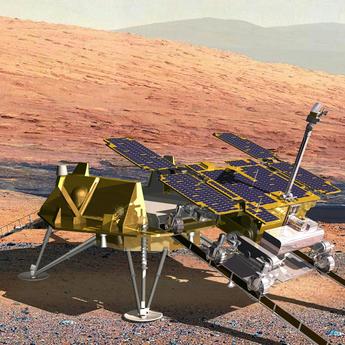
Airbus to design and build ESA’s ExoMars rover lander platform
Press Release
Space
-

Keeping the lights on for the lunar Gateway HALO module
Web Story
Space
-
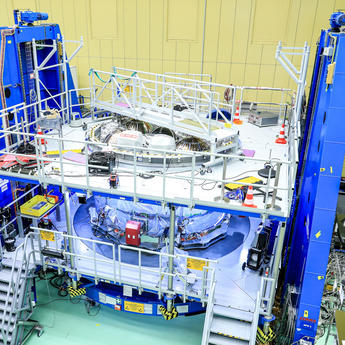
Orion’s European Service Module 3, the backbone of return to the Moon
Web Story
Space
-
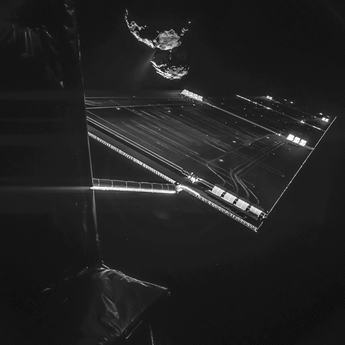
The Rosetta odyssey: first ever comet-chaser
Web Story
Space


Frequently asked questions
about starlab
What is Starlab?
Starlab is a next generation, continuously inhabited commercial space station designed to succeed the International Space Station (ISS). Developed through a global partnership led by Airbus and Voyager Technologies, it will serve as a premier space platform for microgravity research, development and industrial production for space agencies, researchers, and private companies.
What is the role of Airbus in the Starlab joint venture?
Airbus is a founding partner of the Starlab Space Joint Venture that designs, builds and operates the future space station. Airbus is also the lead architect for the station’s main living and working module. We are applying our decades of experience - building key parts of the International Space Station such as the Columbus module and the Orion European Service Module (ESM) - to create a comfortable, high-tech home and work space for astronauts in orbit.
Beyond designing the hardware, Airbus is the bridge for Europe’s future in space. By establishing a dedicated European entity for the project, Airbus ensures that the European Space Agency (ESA) and European researchers and companies have a reliable, long-term place to conduct life-changing science well into the future.
When will Starlab launch?
Starlab is currently scheduled to launch in 2029. The goal is to have the station fully operational and in orbit before the International Space Station (ISS) is decommissioned (planned for the end of the decade) to prevent a research gap in low Earth orbit (LEO) capabilities.
How will it be launched into orbit?
Unlike the ISS, which was built piece-by-piece over a decade, Starlab is designed to be launched as a single, fully integrated unit. It will launch on a single flight of SpaceX’s Starship and will be operational within a few weeks. The optimised design of the station enables the integration of laboratories, payload capacities, habitation and stowage in one compact module.
How many people can live on Starlab?
Starlab is designed to support a permanent crew of four astronauts. However, the station’s flexible design allows it to temporarily accommodate up to eight people during crew handovers or short-term missions.
What kind of research will happen on board?
Starlab is designed to match 100% of the ISS's payload capacity, supporting over 400 experiments per year. Starlab’s user-driven design and robust capabilities make it a premier platform for scientific discovery and technological advancement in space. Major focus areas include:
- Life Sciences: Pharmaceutical research and protein crystal growth.
- Material Science: Developing advanced semiconductors and alloys in microgravity.
- Super computing/ edge computing.