
Future Combat Air System (FCAS)
Shaping the future of air power

A system of systems with the NGWS at its core
Collaborative combat
The Future Combat Air System is a key instrument for ensuring European sovereignty in defence and security.
FCAS will be built around a core Next Generation Weapon System (NGWS). In this “system of systems,” piloted New Generation Fighters will work together with Uncrewed Remote Carriers – all connected to other systems in space, in the air, on the ground, at sea and in cyberspace via a data cloud called the “Combat Cloud.” These connected platforms will act as sensors, effectors and C2 nodes, enabling agile decision making and working together within an open, scalable, service oriented architecture that allows the inclusion of future platforms and technologies.
Various national and allied platforms will supplement the NGWS in a collaborative strategy by adding their unique capabilities. Such a system-of-systems approach will enable seamless collaborative combat across domains by leveraging the connected capabilities of pooled platforms.
A new industrial direction: "Team Gen 6"
Following a joint reorientation by the German and French governments, the development of the integrated 6th-generation fighter jet has transitioned to a new, highly effective industrial setup.
Integrating this fighter jet, alongside other current and future crewed and uncrewed platforms, into the System of Systems will form the core of Europe's next-generation air combat capability.
To drive this next phase following the conclusion of FCAS 1B contracts at the end of 2026, national defence and aerospace leaders have aligned into specialised industrial teams. Committed to multinational cooperation, these teams ensure a faster, more effective development loop:
- Germany ("Team Gen 6"): Eight leading companies—Airbus Defence and Space, AUTOFLUG, Diehl Defence, HENSOLDT, Liebherr, MBDA Germany, MTU Aero Engines, and Rohde & Schwarz—have joined forces. This partnership combines the critical expertise needed for the development and deployment of the 6th-generation fighter jet.
- Spain: Closely intertwined with European partners, the Spanish industry is spearheading a similar initiative collaborating through Airbus Defence and Space, Indra, Grupo Oesia, GMV, ITP, and Sener.
While the development of the overarching "System of Systems" continues as originally planned, this new setup ensures that key technologies (such as AI, low observability, advanced edge computing, engine technologies and precise effectors) are secured within a resilient European supply chain.
Next Generation Weapon System
FCAS Team Gen 6


FCAS - MUT
A milestone for European high-tech development
Future Combat Air System
FCAS marks a major leap in European defence, aiming for full collaborative combat by 2040. It will integrate enhanced platforms such as the Eurofighter and Rafale, using AI, big data, cryptography, and human-machine interaction.
As new capabilities are introduced, European air forces and navies will adapt operationally while industry will drive technological advancements. This coordinated effort will ensure Europe can meet evolving threats and maintain high-tech defence leadership.


A phased roll-out from the late 2020s
A phased roll-out from the late 2020s
Future Combat Air System
FCAS capabilities will roll out incrementally, starting with enhanced situational awareness in the late 2020s and progressing to manned-unmanned teaming in the early 2030s. Upgraded fighters such as the Eurofighter will team with first-generation Uncrewed Collaborative Combat Aircraft (UCCA), leading to the full FCAS vision by 2040 with the Next Generation Weapon System. Remote Carriers, launched from aircraft such as the A400M, will support crewed aircraft with a high degree of autonomy, always under human control.


Sharing secured information is vital for FCAS
Sunrise over Earth
Sharing secured information is vital for FCAS
Future Combat Air System
Connectivity is crucial for FCAS. To operate as a system-of-systems, FCAS requires fast, secure, global communication through satellite constellations. These constellations will ensure high data rates, secure geo-navigation, and real-time, reconfigurable coverage.
Multiple Intelligence, Surveillance & Reconnaissance sources, including radar and Eurodrone optronic cameras, will enable rapid, near real-time situational awareness across air, ground, and sea, ensuring mission success.


FCAS SIMULATOR
The role of Airbus in FCAS
Future Combat Air System
Airbus is co-leading the overall FCAS programme.The Company is leading the pillars for vehicle development of the Remote Carriers, the Combat Cloud, along with work relating to enhanced low observability.
Furthermore, as a key member of both the German "Team Gen 6" and the Spanish industrial initiatives, Airbus bridges national expertise to deliver this 6th-generation combat architecture. The Company has extensive experience in the management and production of major European defence and space secure communications programmes.


Schedule 3
FCAS is vital for Europe’s future
FCAS is key to ensuring Europe's future independence in defence and security. It will strengthen Europe as a centre of advanced industry and technology beyond the defence sector to potential civilian applications.
The innovations developed within this framework secure highly skilled jobs in the long term and strengthen European supply chains.
The programme is also expected to benefit the economies, labour markets and defence sectors of the participating countries over the coming decades, which could be further boosted by potential export sales to approved military services.
You might also be interested in
-

Multi-Domain Combat Cloud (MDCC)
Airbus' Multi-Domain Combat Cloud boosts defence capabilities with a decentralised, cyber-resilient, multi-domain cloud network.
-

MARS Mission System
The Airbus Multiplatform Autonomous Reconfigurable and Secure (MARS) Mission System is a Door-Opener for FCAS.
-
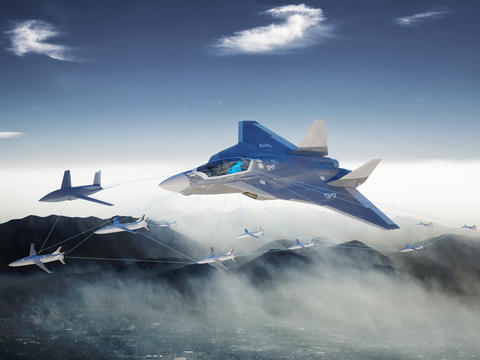
Crewed-Uncrewed Teaming
Airbus is pioneering collaborative combat by developing seamless, intelligent collaboration between manned and unmanned platforms.
-

Uncrewed Aerial Systems
Airbus UAS: Explore advanced uncrewed aerial systems for military, government and commercial missions, including combat, ISR, and…
-

Eurofighter
The Eurofighter Typhoon is the world's most advanced multi-role combat aircraft and sets the standard for new generation fighter…
-
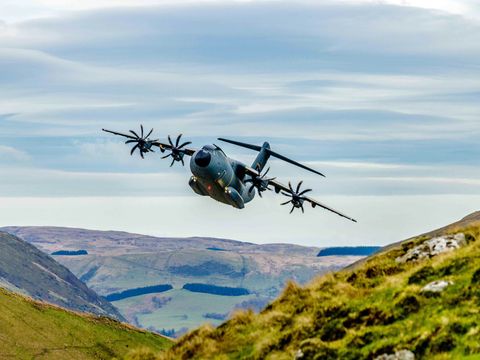
A400M
The Airbus A400M is the most advanced airlifter, capable of carrying strategic loads, delivering to unprepared airfields and…
-

Multi-domain operations: Enter the future of European defence
European defence aerospace is changing, powered by smart, networked capabilities for multi-domain operations. Learn how Airbus…


Discover FCAS assets in the Media Centre
Browse our gallery and find out more assets on Future Combat Air Systems.
The latest FCAS news
In the Spotlight
-

Eurodrone: Europe’s sovereign skies
Web Story
Defence
Discover the Airbus Eurodrone, Europe's MALE RPAS, and learn how this UAS co-developed by Airbus strengthens European sovereignty. -

Preparing the Airbus A400M for tomorrow
Web Story
Defence
-

The Eurofighter’s role in defence, industry and sovereignty
Web Story
Defence
-

Airbus completes acquisition of infodas, strengthens cybersecurity portfolio
Press Release
Defence
-

Pitch Black 24: Eurofighter aircraft defend territory from enemy attack
Web Story
Defence

