
Orion European Service Module
Powering humankind’s return to the Moon - #artemismission

An integral part of NASA’s Artemis mission
More than 50 years after the first crewed Moon landing in 1969, the US space agency, NASA, is setting out once again to visit Earth’s satellite. This time, the goal is not merely a short visit, but to establish the foundations for a permanent human outpost in the long term. Under its Artemis programme, with its first launch in 2022, NASA is planning to return to the Moon with a crewed landing by 2028.
Europe and Airbus are playing a major role in this ambitious project, for the first time ever, NASA has entrusted a non-US company to build a mission-critical element for a US Human Spaceflight Mission.
Under a European Space Agency (ESA) contract, Airbus is responsible for building the European Service Module (ESM), which both propels and manoeuvres the Orion spacecraft and provides the crew with air and water, as well as keeps the module at a comfortable temperature.
The Orion spacecraft consist of two main parts: the Crew Module, which is the habitat for up to four astronauts and their cargo, and the Service Module - built at the Airbus facility in Bremen. The two modules are attached and connected via the Crew Module Adapter.
Together, they form the Orion spacecraft
-


ESM to power and propel NASA’s Orion spacecraft_EN
-

Powering the return to the Moon


Key functions of the European Service Module
The ESM is a versatile and powerful component with several key responsibilities:
· Propulsion: The Orion spacecraft relies on the 33 engines onboard the ESM to provide thrust and propulsion to manoeuvre Orion to its destination.
· Power: Four 7-meter solar wings generate 11.2 kW of electricity - enough to power two households. This provides the electricity required to run the spacecraft's systems and sustain the crew throughout the mission.
· Life support: The module supplies the crew with vital consumables such as water and oxygen.
· Crew comfort: The ESM maintains a standard temperature within the crew capsule despite the extreme environment in space.
Facts & figures
13+ tonnes at launch
The Orion ESM is cylindrical in shape and approximately 4 metres in diameter and height. At launch, it weighs just over 13 tonnes, making up roughly 3/5 of the Orion spacecraft’s total mass.

12 km of cables
More than 20,000 parts and components are used in each ESM, from electrical equipment to engines, solar panels, fuel tanks and life support supplies, to approximately 12 kilometres of cables.

Kevlar skin
The ESM is covered with Kevlar to avoid damage by micrometeorites and space debris impact. In addition, key redundant systems such as the avionics are positioned on opposite sides of the module.

Facts & Figures
33 thrusters
The ESM will also be responsible for orbital manoeuvring and position control. Its 8.6 tonnes of fuel power the main engine, 8 auxiliary thrusters and 24 smaller thrusters used for attitude control.

A 19 m ‘wingspan’
The ESM relies on a four-wing solar array, each wing consisting of 3 separate panels that unfold to their 7 metre length after launch, hence giving the spacecraft a ‘wingspan’ of 19 metres across.

15,000 solar cells
15,000 solar cells generate enough energy to power two households. Each of the four arrays turns on two axes in order to be able to align with the sun for maximum power generation.


Orion ESM-3 integration
Orion ESM-3 integration at Airbus Bremen
Going back to the Moon couldn’t happen without us
ESA contracted Airbus to build 6 European Service Modules.
Over 150 engineers from 10 countries have crafted the ESM together with ESA and industry partners, starting from Airbus’ experience gained on the Automated Transfer Vehicle (ATV), which flew 5 times to the ISS.
Building the ESM modules in quick succession means adjusting the cleanroom facilities at the Bremen site with the ambition to deliver one ESM per year.


Orion © NASA
Successful uncrewed Artemis I mission with ESM-1
Launched on 16 November 2022, the Orion spacecraft with the first ESM module spent 25 days, 10 hours, 53 minutes in flight. It travelled over 70,000 km beyond the Moon, before the Crew Module splashed back down in the Pacific Ocean on 11 December 2022. This uncrewed test mission was a tremendous success with all mission objectives fully achieved and invaluable data gathered for future missions.


Orion-ESM - integration in Bremen
Artemis II, a crucial crewed test fight
The Artemis II mission flew four astronauts around the Moon and back to Earth: NASA Commander Reid Wiseman, Pilot Victor Glover, and Mission Specialists Christina Koch and Jeremy Hansen (of the Canadian Space Agency).The crew piloted Orion to 7,500 km beyond the Moon before completing a lunar flyby and returning safely to Earth. The mission served to demonstrate a broad range of capabilities needed for the deep space missions that followed. It featured the Airbus-built European Service Module (ESM), the core technology that acted as the Orion spacecraft’s powerhouse and life support system, ensuring the astronauts' safe journey throughout the historic flight.
Subsequent crewed Artemis missions
ESM-3 shipped to Cape Canaveral
Orion's ESM-3 was delivered to NASA's Kennedy Space Center in September 2024, to be integrated and tested with the Crew Module. This mission serves as the final test flight before NASA transitions to an accelerated, standardized launch architecture.
The Artemis III mission, targeted for mid-2027, has been redefined as a low-Earth orbit (LEO) systems validation flight.

Building of ESM-4 to ESM-6 at Airbus Bremen cleanroom
Following its successful completion at Airbus Bremen, the fourth European Service Module (ESM-4) has been delivered to NASA to begin preparations for Artemis IV. ESM-4 will be a vital part of the Artemis IV mission. Artemis IV (scheduled for 2028) will now serve as the first crewed lunar landing mission of the 21st century.

Back to the Moon to stay and venture onward
The Artemis Missions will pave the way for humans to continuously live on the Moon. On their missions, the Artemis astronauts will investigate its surface and learn how to live and work there.
While the Moon is conveniently close to Earth, it also provides the resources needed for reaching destinations beyond - making it an ideal point of origin to prepare for the next ‘giant leap’: human exploration of Mars.
The creation of a continuous human presence on the Moon will be crucial to building up operational experience in reliably supporting life away from Earth. It will build the confidence needed for conducting long-term missions, before multi-year human missions to Mars can be envisaged in the future.
-

Going back to the Moon couldn’t happen without us
50 years after their last visit, humans will soon land on the Moon again. Why the historic mission would not be possible without Airbus - hand in hand with the European Space Agency - and how it could enrich our lives on Earth - Guillaume Faury, Mike Schoellhorn and Jean-Marc Nasr exclusively provide all the details.
-
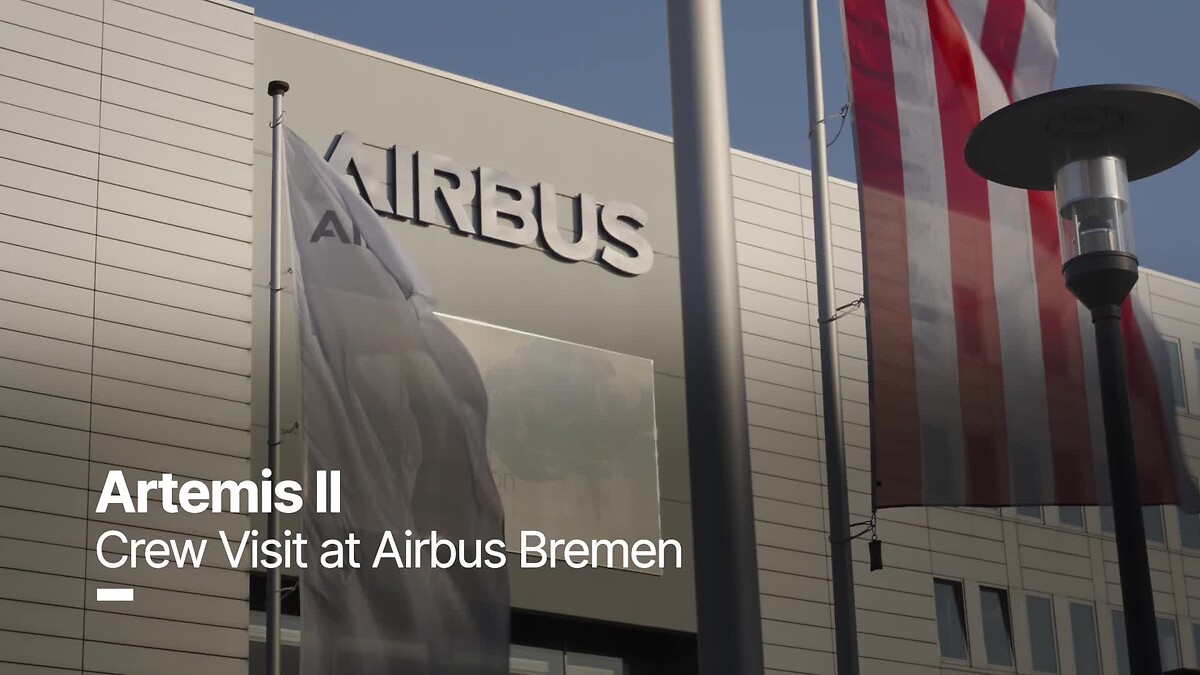
Artemis II - Crew visit at Airbus Bremen
Artemis II - Crew visit at Airbus Bremen


Airbus industrial contributions to the ESM by country
-
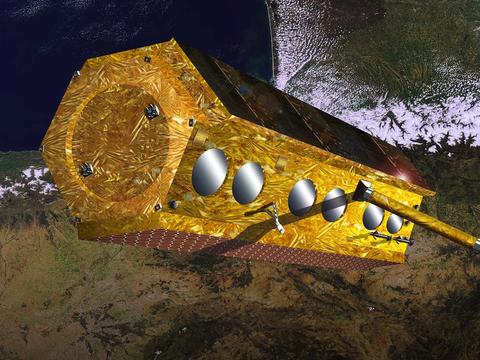
Leading space technology 'made in Spain'
Airbus drives the space sector forward by creating innovative space and defense solutions and services for our customers.
-
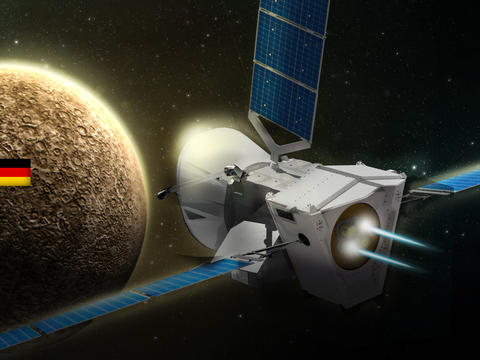
Space technology made in Germany
As Germany’s biggest space player, Airbus people make up around half those working in the space industry in Germany.


Media Centre
Browse videos, animations and footage of Orion ESM
The latest Orion news
In the spotlight
-

Artemis II crew touches down at Airbus in Bremen to celebrate a flawless flight
Web Story
Space
NASA Artemis II astronauts visit Airbus Bremen to share flight insights, helping teams prepare ESM hardware for the Artemis III lunar docking mission. -

Artemis II lifts off: destination Moon with the Orion spacecraft!
Web Story
Space
-

Heart of the mission: Airbus-built ESM to power historic Artemis II crew to the Moon
Press Release
Space
-

Artemis II: Why we are going back to the Moon and why it matters
Web Story
Space
-

Airbus ships fourth European Service Module for Artemis IV
Press Release
Space

Frequently asked questions
ABOUT ESM
What is the European Service Module (ESM)?
The ESM is a major component of NASA's Orion spacecraft that will carry astronauts to the Moon as part of the Artemis programme. Developed by Airbus for the European Space Agency (ESA), it is located below the Crew Module and provides essential capabilities for the spacecraft’s operations and the crew.
What is the main purpose of the ESM?
The European Service Module (ESM) provides essential systems required for the mission. It delivers propulsion for space manoeuvres, electricity via its four solar wings, vital life support for the astronauts such as water, oxygen, and nitrogen, while also regulating the spacecraft's temperature.
How many engines does the ESM have and what are they used for?
The European Service Module (ESM) features a total of 33 engines that provide main thrust, orbital manoeuvres and attitude control to the Orion spacecraft. Together, they ensure the spacecraft can navigate safely from Earth to the Moon and back.
How does the ESM generate power for the Orion spacecraft?
The European Service Module (ESM) acts as the powerhouse for the Orion spacecraft, relying on four solar wings to convert solar energy into electricity to power the entire spacecraft and its systems, including the onboard computers, thermal control, communications and navigation. Each 7-meter solar arrays can turn on two axes to maximise power generation.
Why is it called the "European" Service Module?
It is the first time NASA has entrusted a European-built system with a mission-critical role for a US crewed mission. As the European Space Agency’s (ESA) primary contribution to the Artemis programme, the module is designed and manufactured in Europe (led by Airbus in Bremen, Germany) with the expertise of 10 different European nations.
How much power do the solar arrays generate?
The ESM has four-wing solar arrays that span 19 metres (62 feet) when fully deployed. Together, they contain 15,000 high-efficiency solar cells and generate roughly 11.2 kW of electricity - enough to power two average European households. These moveable wings continuously track the Sun but can also be folded back to protect them from physical stress.
How many astronauts can it support and for how long?
The ESM is designed to support a crew of four astronauts for up to 21 days of active mission time. This duration is determined by the storage capacity of the ESM’s tanks, which carry water, and breathing gases and other consumables.
What happens to the ESM at the end of a mission?
Once the ESM has successfully guided the Orion spacecraft back to Earth, the module separates from the Crew Module just before re-entry. While the astronauts in the Crew Module descend safely for a splashdown, the ESM is designed to burn up completely in the upper atmosphere during re-entry.
How many ESM units are being built?
NASA and ESA have currently contracted for six flight models (ESM-1 through ESM-6).
- ESM-1 flew on the uncrewed Artemis I mission (2022).
- ESM-2 is assigned to Artemis II, the first crewed flight (2026).
- ESM-3 will power the Artemis III mission. This mission will test rendez-vous and docking procedures between Orion and the lunar landers.
Discover more about space exploration at Airbus
-

Moon missions
Our lunar mission solutions will enable humans to return to the Moon and establish a permanent presence on the lunar surface.
-
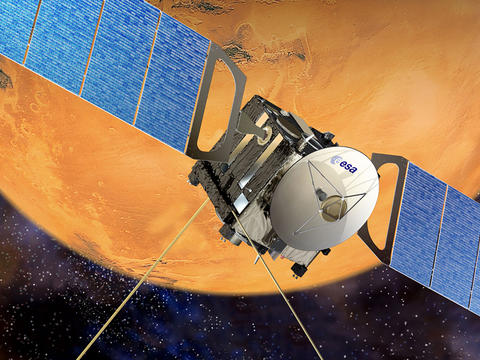
Mars missions
Drawing on its experience in interplanetary missions, Airbus is developing a rover and a satellite to increase our knowledge of…
-
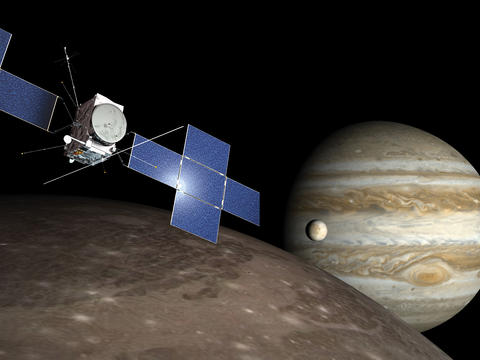
JUICE
The Airbus-built JUICE spacecraft will study Jupiter and its icy moons: Ganymede, Callisto and Europa.
-
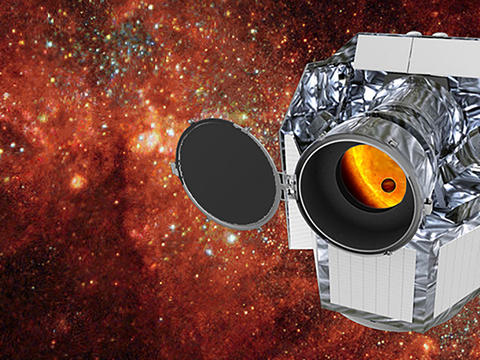
CHEOPS
The CHEOPS’ ESA mission is providing data to understand the make-up of exoplanets that orbit nearby stars.
-

BepiColombo
The ESA-JAXA BepiColombo spacecraft mission will explore Mercury.
-
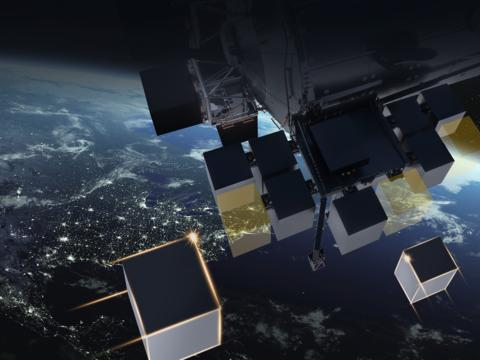
Bartolomeo
The Airbus-operated Bartolomeo platform enables the external payloads to be hosted in low Earth orbit on board the ISS.
-

Starlab
A joint venture between Voyager, Airbus and partners is designing, building, and will operate the future space station Starlab.


