
BepiColombo
The first European-led mission to Mercury

Arrival at Mercury
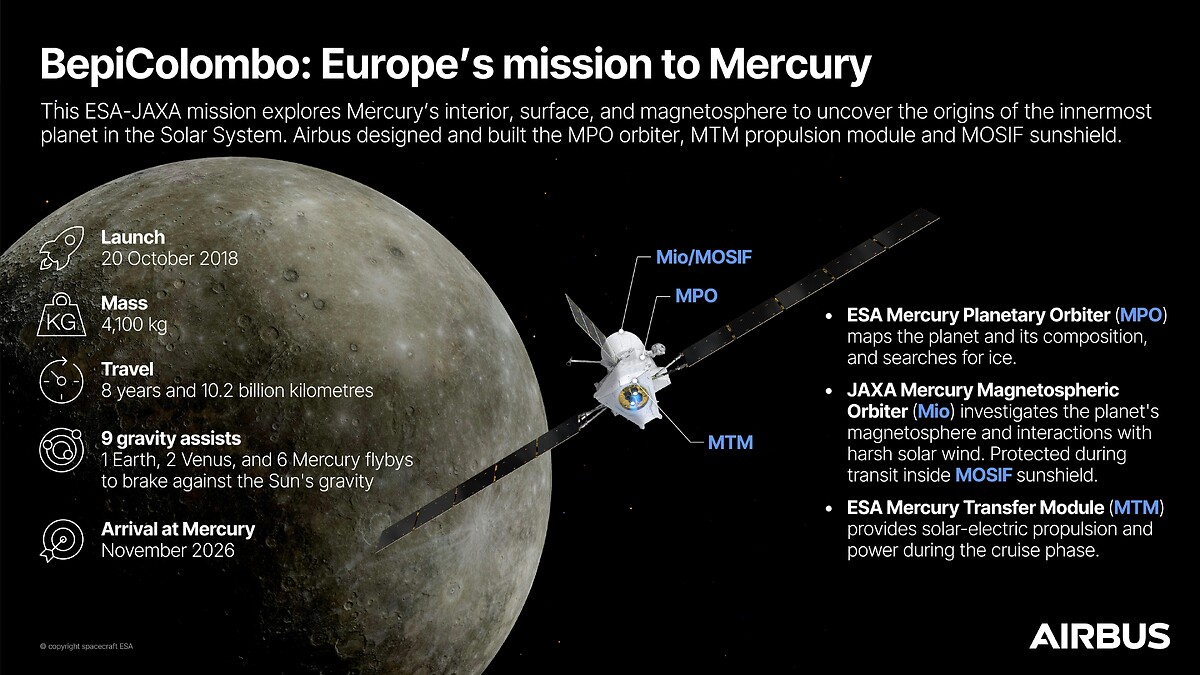
BepiColombo, Europe's first mission to Mercury , named after Italian professor Giuseppe “Bepi” Colombo – began in October 2018 on a journey to the Solar System’s smallest and least-explored terrestrial planet, with Airbus playing an important role in this deep-space exploration mission.
A four in one satellite to uncover Mercury’s mysteries
As a joint effort between the European Space Agency (ESA) and the Japan Aerospace Exploration Agency (JAXA), BepiColombo will examine the peculiarities of Mercury's internal structure and magnetic field, as well as its interactions with the Sun and solar wind. It will also investigate surface features and chemistry, such as the ice within permanently shadowed craters.
The mission's scientific insights will significantly advance our understanding of how the Solar System formed, and how planets evolve close to their parent stars. Starting science operations in early 2027, the two orbiters will undertake a nominal one-year science mission, with a possible extension.

BepiColombo: Europe´s mission to Mercury
One mission, multiple components
BepiColombo brings together four main modules:
- ESA’s Mercury Planetary Orbiter (MPO) Maps Mercury’s surface and mineralogy using 11 dedicated scientific instruments
- JAXA’s spin-stabilised Mercury Magnetospheric Orbiter (also known as Mio): Investigates the magnetosphere and plasma environment
- Mercury Transfer Module (MTM): Delivers solar-electric propulsion during the long interplanetary cruise
- and the MOSIF Sunshield: Protects Mio from harsh solar radiation during transit
Airbus served as prime contractor for system design and the manufacturing of the MPO, MTM and MOSIF.
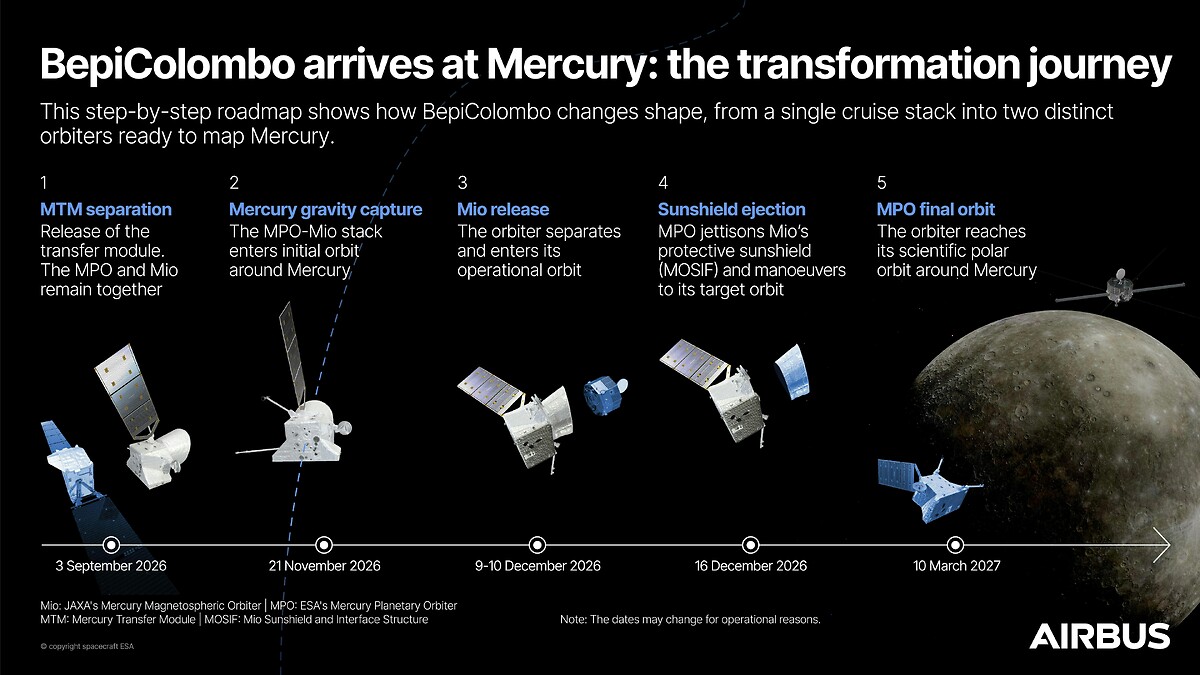
At destination and after the MTM release, the MPO and Mio still join together and are captured by Mercury's gravity. MPO's thrusters guide Mio into its high elliptical orbit for deployment. Once Mio separates, MPO ejects the MOSIF sunshield and descends into its own lower orbit.

BepiColombo timeline
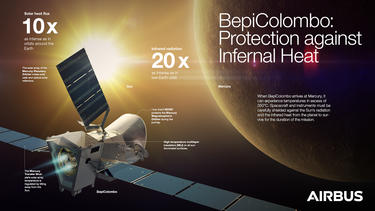
Managing extreme heat in orbit
Situated just 58 million kilometres from the Sun, Mercury presents a formidable challenge to visiting spacecraft. Daytime surface temperatures reach up to 430° Celsius hot enough to melt some metals. Consequently, spacecraft orbiting Mercury must not only cope with intense solar heat, but also with infrared radiation emitted by the planet’s surface.
To protect the spacecraft, the BepiColombo team wrapped every external surface of ESA’s MPO - except for the radiator side - in high-temperature, Multi-Layered Insulation (MLI). The material, made up of 50 layers of ceramic and aluminium, was custom-built for the BepiColombo mission. Furthermore, its antennas are built from heat-resistant titanium, with a high-temperature protective coating.
While MPO’s scientific payload faces Mercury to map its surface, a dedicated radiator continuously points away into deep space to safely vent heat.
airbus-bepicolombo-infernal-heat-infographic
Infographics for download
BepiColombo
Infographics for download
BepiColombo: Europe´s mission to Mercury
BepiColombo timeline

airbus-bepicolombo-infernal-heat-infographic
Infographics for download
BepiColombo: Europe´s mission to Mercury
BepiColombo timeline
airbus-bepicolombo-infernal-heat-infographic
-

BepiColombo - Mission to Mercury
-

BepiColombo: the journey
This video is about the journey with outro
-

BepiColombo: the separation
This video is about the seperation with outro
-

BepiColombo: Heat Protection
This video is about heat protection with outro

Media Centre
Browse our photos, videos and downloadable assets of BepiColombo
The latest BepiColombo news
In the spotlight
-
Electric propulsion gives the “kick” to spacecraft in exploring new worlds
Web Story
Space
In science fiction, exotic warp drives are used to propel imaginary starships on their exploratory adventures where no humans have gone before. Reality is just as exciting, as Airbus has pioneered… -
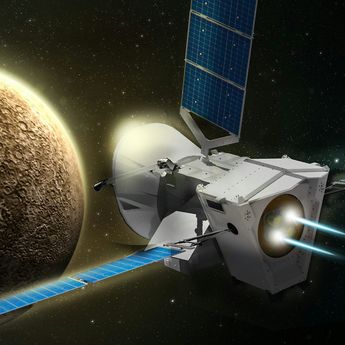
Say hello – wave goodbye to BepiColombo
Press Release
Space
-
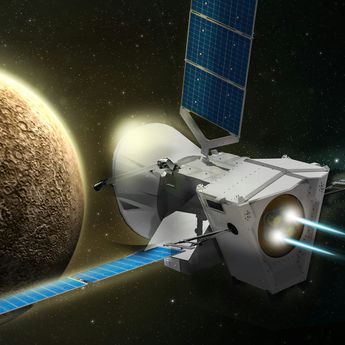
Ariane 5 successfully launched from Kourou: BepiColombo is now on its long ‘braking…
Press Release
Company
-
BepiColombo - the four-in-one satellite to uncover Mercury´s mysteries is readied…
Press Release
Company
-
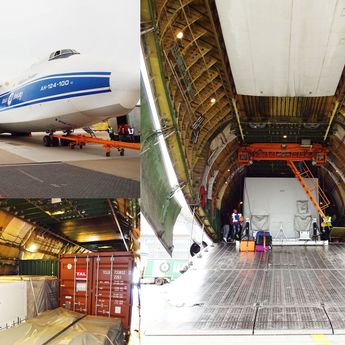
ESA´s BepiColombo takes to the Air
Press Release
Company


Frequently asked questions
about BepiColombo
What is the BepiColombo mission?
BepiColombo is Europe’s first mission to Mercury, the smallest and least-explored terrestrial planet in the Solar System. Named after the Italian professor Giuseppe “Bepi” Colombo, the complex mission aims to unravel how planets forming close to parent stars evolve.
Who are the space agencies and industrial partners behind BepiColombo?
The mission is a joint collaboration between the European Space Agency (ESA) and the Japan Aerospace Exploration Agency (JAXA). Airbus Defence and Space acted as the industrial prime contractor for ESA, leading an international consortium of over 80 companies across 12 European nations to design, manufacture, and assemble the spacecraft.
What is Airbus’s exact role in building BepiColombo?
As prime contractor, Airbus led the overall system architecture, manufacturing and spacecraft integration.
Airbus built three of the mission’s four primary module: : the Mercury Planetary Orbiter (MPO), the Mercury Transfer Module (MTM), and the JAXA’s module thermal shield (MOSIF).
While JAXA manufactured the Mio orbiter in Japan, Airbus integrated all four modules into a single 4.1-tonne composite stack.
Why is BepiColombo called a “dual-orbiter” mission?
Because of the huge thermal and orbital challenges of reaching Mercury, the mission combines four distinct operational modules into a single launch stack :
- ESA's Mercury Planetary Orbiter (MPO): To map Mercury's surface and mineralogy.
- JAXA's Mercury Magnetospheric Orbiter (Mio): To investigate the planet's magnetosphere and exosphere.
- Mercury Transfer Module (MTM): To propel the stack along its interplanetary trajectory
- MOSIF: Protects the Mio orbiter from intense solar radiation until stacked separation at Mercury
What are the main scientific objectives to study Mercury?
The MPO and Mio orbiters will perform measurements about Mercury's surface composition magnetic field, and its interactions with the Sun and solar wind.
When did the mission launch and when will it reach its destination?
BepiColombo launched in October 2018 aboard an Ariane 5 rocket. Following a series of nine complex planetary flybys (one of Earth, two of Venus, and six of Mercury) the spacecraft arrives at Mercury in November 2026 to begin its orbit insertion sequence. Once captured by Mercury's gravity, the stack will undergo module separation, instrument deployment, and orbital positioning. Primary science operations for the MPO and Mio orbiters are scheduled to begin in April 2027.
How long will the spacecraft study the planet?
Once safely in their respective orbits around Mercury, the MPO and Mio orbiters will conduct a nominal one-year science mission, with the possibility of an extension depending on spacecraft health and fuel.
How does the spacecraft survive thermal radiation hot enough to melt metal?
Orbiting as close as 46 million kilometers from the Sun at perihelion, BepiColombo experiences direct solar radiation ten times more intense than on Earth, alongside intense thermal infrared radiation emitted from Mercury’s surface, which reaches 430° Celsius. To protect the instrument and platform electronics inside, Airbus implemented an advanced thermal protection system:
- Custom High-Temperature Multi-Layer-Insulation (HT MLI) comprising up to 50 layers, with the outermost layer serving as a heat shield made of ceramic fabric and metallic foils
- Elaborate heat pipe network and a large radiator with Titanium fins optimised to reflect Mercury infrared away from the spacecraft while continuously radiating internal heat into cold, deep space
- Extreme-heat materials: external components are protected by HT MLI or built from heat-resistant titanium covered by specialised high UV and high temperature resistant white coating, solar panels use specialised reflective glass and heat resistant sandwich structures, and exposed wiring harnesses are encased in protective tungsten-sheathed insulation
What happens to the module stack when it reaches Mercury’s orbit?
Once at the destination, the transfer module (MTM) is released. The MPO and Mio modules are captured by Mercury's gravity together. The MPO uses its thrusters to guide Mio into a high elliptical orbit. After Mio separates, the MPO ejects the protective MOSIF sunshield and descends into its own lower orbit to begin mapping.
Discover more about space exploration at Airbus
-

Moon missions
Our lunar mission solutions will enable humans to return to the Moon and establish a permanent presence on the lunar surface.
-
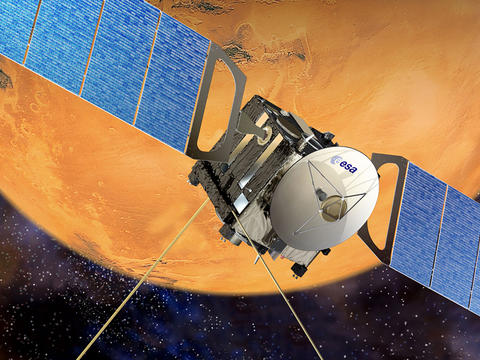
Mars missions
Drawing on its experience in interplanetary missions, Airbus is developing a rover and a satellite to increase our knowledge of…
-
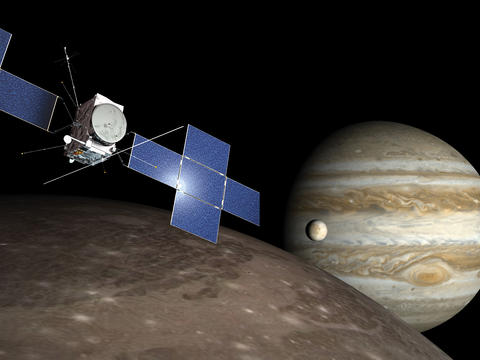
JUICE
The Airbus-built JUICE spacecraft will study Jupiter and its icy moons: Ganymede, Callisto and Europa.
-
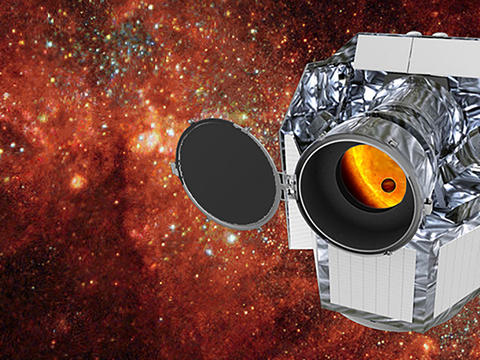
CHEOPS
The CHEOPS’ ESA mission is providing data to understand the make-up of exoplanets that orbit nearby stars.
-
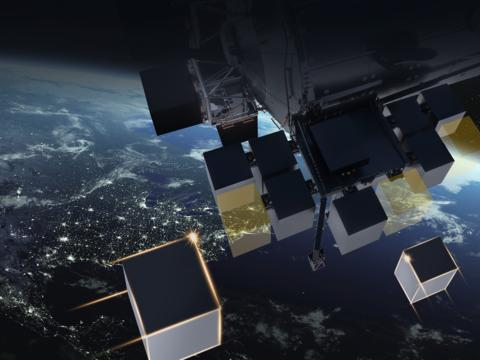
Bartolomeo
The Airbus-operated Bartolomeo platform enables the external payloads to be hosted in low Earth orbit on board the ISS.
-

Starlab
A joint venture between Voyager, Airbus and partners is designing, building, and will operate the future space station Starlab.


