
Airbus A330 Family, versatile widebody aircraft
An experience passengers love. The perfect fit for any route.

A versatile family
UNMATCHED VERSATILITY
The Airbus A330 is a true cornerstone of the widebody market, valued by airlines and passengers alike.
Its success is built on a foundation of versatility, enabling profitable operations on a wide range of routes from short-haul to extended-range missions.
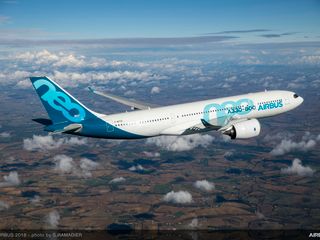
With the introduction of the modern A330neo, this family continues its legacy, combining its renowned versatility with the latest technology for a new generation of efficiency and comfort.
-

-

Airbus A330neo_The versatile champion
Animated video of the A330neo describing its main features and attributes.
-


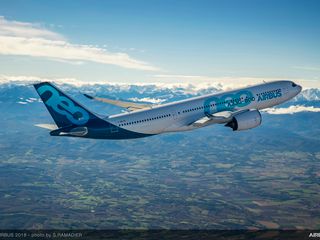
A330 in flight at Toluca & La Paz
High Altitude mission at Toluca & La Paz


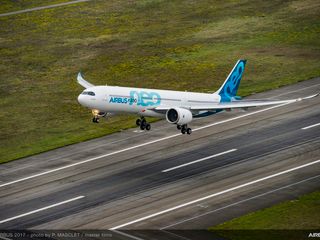
A330-800 Airbus MSN1888 on ground - first flight
A330-800 Airbus MSN1888 - First flight - briefing
The A330 Family story
A LEGACY OF EVOLUTION
The story of the A330 Family is one of continuous improvement, adapting a proven design to meet the evolving needs of global aviation.
Upon its entry into service in 2018, the A330neo carried forward the family's reputation by delivering a double-digit reduction in fuel burn per seat, cementing the A330's status as a mainstay of the skies, recognised for its versatility and proven performance.
From the A330 entry into service in 1994
The A330ceo: a proven foundation
Launched in the 1990s, the original A330ceo (Current Engine Option) generation quickly demonstrated the efficiency and versatility of a twin-engine widebody. It established the family's reputation through two main variants:
- The A330-300 (1994): The first model to enter into service, it proved the economic efficiency of a twin-engine aircraft on long-haul routes.
- The A330-200 (1998): A version with a shorter fuselage for extended range, showcasing the platform's flexibility for diverse missions.
The A330neo: a new generation of efficiency
Building on this legacy, Airbus launched the A330neo programme in 2014 to reinvent the aircraft for the future. This new generation, comprising the A330-800 and A330-900, integrates major technological advancements:
- Latest generation, Rolls-Royce Trent 7000 engines
- Latest aircraft systems
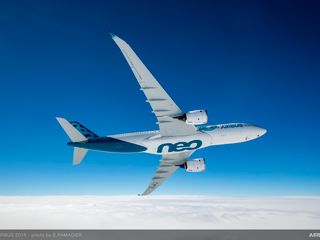
- A new, higher-span wing with composite winglet inspired by the A350
- The Airspace cabin, delivering an unique passenger experience

Explore the A330 Family in detail
Discover the technical specifications, performance data and unique capabilities of the A330 Family.
The A330: mid-sized airliner, major capabilities
CHARACTERISTICS
The Airbus A330 Family offers exceptional flexibility across its ceo and neo generations. All variants share a common widebody platform, easing airport integration and pilot training.
Seats* | Range (up to) | |
A330-800 (A330neo) | Up to 257 passengers* | 8,100 nautical miles |
A330-900 (A330neo) | Up to 287 passengers* | 7,350 nautical miles** |
* in a typical 3 class configuration (8 abreast)
** target entry in service 2027


A330neo enhanced Airspace cabin
The A330 Family cabin
INSIDE THE A330
The A330’s widebody cabin is designed around the passenger, offering an exceptional foundation of comfort, space, and quiet. In economy, the typical 2-4-2 seating layout provides passengers with generous personal space. We ensure passenger well-being with a low-noise environment and by circulating the cabin air with highly efficient HEPA filters every two to three minutes, helping travellers arrive feeling refreshed.
The modern A330neo builds on this legacy by integrating our latest Airspace cabin. This evolution in cabin design provides an outstanding passenger experience, featuring significantly larger overhead storage compartments and advanced, customisable LED lighting scenarios.
The A330neo: technologies to deliver efficiency
INNOVATION
The A330neo integrates proven technologies from the A350 to deliver efficiency and a superior passenger experience.
Materials
- Aluminium and titanium alloys are used in key structural areas for high strength at a lower weight, enhancing durability.
- Composite materials, including Carbon Fibre Reinforced Polymer (CFRP), are used in components like the tail and the A330neo's winglets to reduce weight and improve corrosion resistance.
Wings
- A high-aspect-ratio wing design minimises drag, while the A330neo’s A350-inspired composite winglets increase the wingspan to further reduce fuel burn.
Cockpit
Updated to support A330neo characteristics leveraging A350 technologies. The A330 benefits from the advanced Airbus cockpit design, which receives high marks from the thousands of pilots who fly Airbus aircraft daily.
- An advanced digital backbone includes sophisticated flight management and navigation systems for optimised flight paths.
- Fly-by-wire flight controls allow for smoother handling and increased safety
- Side-stick controls, HUD integration, and intuitive avionics support pilot confidence and cross-fleet flexibility
- The A330neo is connected to the Airbus Skywise platform, enabling real-time data analysis for predictive maintenance and optimised fuel operations.
- Cockpit commonality with other Airbus widebodies like the A350 reduces training time for pilots and increases operational flexibility for airlines. The A330 Common Type Rating allows pilots to transition from A330 to A350 aircraft in only eight days without full flight simulator sessions. This enables carriers to use a single-fleet flying concept with a pool of pilots qualified for both aircraft, providing increased scheduling flexibility and mobility. Learn more about Full Flight Simulators
Cabin Systems
- The Airspace cabin on the A330neo enhances the passenger experience with quieter interiors, full LED mood lighting, and larger overhead bins.
- Cabin air is fully refreshed with HEPA-filtered air every 2-3 minutes


SAF truck at Airbus Canada
The A330: reduced fuel burn and CO₂ emissions
The A330 Family contributes to Airbus' commitment by lowering emissions and supporting more efficient flight operations. This is achieved through key, measurable improvements:
- Reduced fuel burn: The A330neo, powered by new-generation Rolls-Royce Trent 7000 engines and advanced winglet, delivers a 25% reduction in fuel consumption and CO₂ emissions per seat compared to previous-generation aircraft. The A330neo was the first aircraft to be certified for the latest ICAO CO₂ emission standards.
- Sustainable Aviation Fuel (SAF) capability: The A330 Family is certified to fly with up to a 50% blend of Sustainable Aviation Fuel (SAF).
We love A330
-


A330 in flight at Toluca & La Paz
High Altitude mission at Toluca & La Paz
-

-

-


-

-


People looking at the hero light onboard the A330neo Airspace cabin.
A330neo Airspace cabin step 5 reveal
-


Passenger experience in Business Class of A330neo Airspace cabin
Business Class, work enjoy restHero
-

FAL A330 English Version
This video provides an inside look at the FAL (Final Assembly Line) for the Airbus A330
-


A330 FAL section arrival to station 40
Final Assembly Line - Station 40 - Section arrival
-


A330 FAL wings arrival to station 40
Final Assembly Line - Station 40 - Wings arrival


A330 FAQs
How many passengers can the Airbus A330 seat?
In a standard three-class configuration, the A330 typically seats between 220 and 300 passengers. In higher-density, single-class configurations, it can carry up to 465 passengers, depending on the model and airline setup.
What is the range of the Airbus A330?
- A330-800neo: Up to 8,100 nautical miles (15,000 km)
- A330-900neo: Up to 7,350 nautical miles (13,250 km) - (target entry in service 2027)
- A330-200: Around 7,250 nautical miles (13,450 km)
- A330-300: Around 6,350 nautical miles (11,750 km)
These ranges enable airlines to operate anything from high-frequency regional routes to ultra-long-haul flights connecting major global hubs non-stop.
Where does the A330fly?
Thanks to its versatility, the A330 can fly on very short routes, one of the shortest being Manila to Puerto Princesa operated by Cebu, as well as very long routes such as Rome to Los Angeles, operated by ITA.
What is the difference between the Airbus A330-800 and A330-900?
While both belong to the A330neo Family and share next-generation technology, the A330-800 has a longer range (up to 8,100 nm) and seats fewer passengers, making it ideal for ultra-long-haul routes with lower traffic. The A330-900 has more seats and is optimised for lower unit costs on high-demand long-haul routes.
When did the Airbus A330 first enter service?
The Airbus A330 entered commercial service in 1994 and has been continuously improved since. The latest A330neo variant joined the skies in 2018, bringing new engines, updated systems, and a modern cabin to this proven long-range twinjet.
What are the different variants of the Airbus A330 family?
The A330 Family includes both first and next-generation aircraft:
- A330-200: A shorter fuselage model ideal for long-range routes. Typically seats 210 - 250 passengers with a range of ~13,450 km (7,250 nm).
- A330-300: The original stretched version, seating 250 - 290 passengers. Designed for high-capacity regional and long-haul use, up to 6,350 nm.
- A330-800neo: Based on the A330-200, this New Engine Option variant offers next-generation fuel efficiency, Airspace cabin, flying up to 257 passengers in a 3 class configuration and over up 8,100 nm range.
- A330-900neo: The most popular variant, based on the A330-300. Carrying up to 287 passengers in a typical configuration with a range of 7,350 nm (target entry in service 2027) .
All variants benefit from a high degree of cockpit and operational commonality across the A330 Family and with other Airbus aircraft.
What technologies are used in the A330 cockpit?
The A330 cockpit features:
- Airbus’ signature fly-by-wire control system
- Enhanced avionics
- Advanced flight management systems for fuel and route optimisation
- Commonality with other Airbus aircraft for reduced training costs and crew flexibility
Where are Airbus A330 aircraft manufactured?
The Airbus A330 is primarily assembled at Airbus’ widebody final assembly line in Toulouse, France. However, the manufacturing of A330 components is a global effort.
Major structural parts are produced at Airbus sites across Europe:
- Wings are built in Broughton, UK,
- Fuselage sections are manufactured in Hamburg, Germany, and Saint-Nazaire, France,
- Horizontal tailplanes are produced in Spain,
- Key systems and components also come from a wide network of suppliers around the world.
This global industrial model enables Airbus to combine regional expertise with world-class precision, ensuring every A330 meets the highest standards of quality, safety, and performance.
Discover more about A330
-

Avolon orders 35 Airbus A330-900 and 75 A320neo Family aircraft
Press Release
Commercial Aircraft
Avolon, a leading global aviation finance company, has placed a firm order for 110 Airbus aircraft, comprising 35 A330-900 and 75 A320neo Family aircraft. -

SAS orders 18 Airbus A330neo to accelerate growth and fleet modernisation
Press Release
Commercial Aircraft
-

Philippine Airlines extends FHS support agreements across its Airbus fleet
Press Release
Commercial Aircraft
-

Delta Air Lines grows Airbus fleet with order for 31 additional widebody aircraft
Press Release
Commercial Aircraft
-
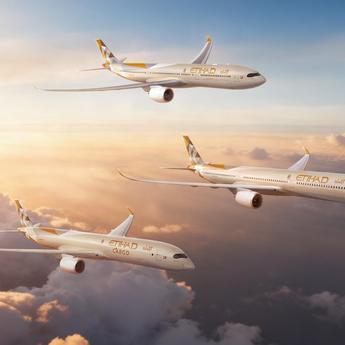
Etihad Airways grows its Airbus widebody fleet becoming a new A330neo customer,…
Press Release
Commercial Aircraft


You might also be interested in
Discover more
-
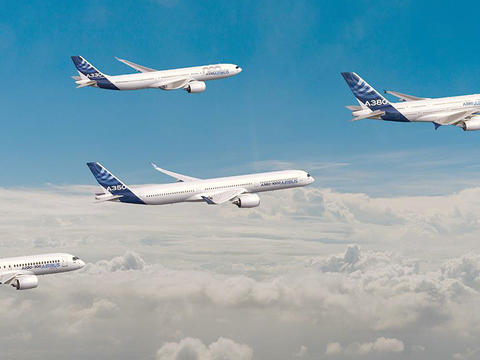
Airbus Passenger Aircraft
Explore Airbus passenger aircraft. Discover comfortable, safe & efficient flight with our A220, A320, A330, A350 & A380 families…
-

Airbus A220 Family, purpose-built single-aisle aircraft
Discover the Airbus A220: a clean-sheet design single-aisle aircraft offering quiet comfort, fuel efficiency, and unmatched…
-

Airbus A320 Family, the most delivered aircraft ever
Flown by 300+ operators, the A320 Family is an icon of innovation. Discover its fly-by-wire cockpit, spacious Airspace cabin, and…
-

Airbus A350 Family, long range widebody aircraft
Experience the Airbus A350, designed for the future of long-haul travel. Discover its clean-sheet design, advanced composites,…
-
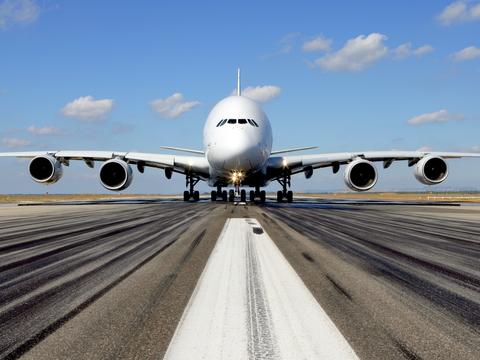
Airbus A380
Discover the Airbus A380: an iconic double-decker aircraft brimming with innovative technology. Learn about its history, design…


