
Multi-domain operations: Enter the future of European defence
European defence aerospace is changing, powered by smart, networked capabilities for multi-domain operations. We are here to drive its transformation.

Ensuring European security across domains
Prevail as one
Military operations are becoming increasingly complex, involving ever more advanced technologies and tactics. Going forward, this calls for an integrated approach. Multi-domain operations present a coherent and adaptive way of carrying out missions, uniting land, air, sea, space and cyber under one interconnected roof.
Within this multi-domain environment, Airbus is developing an interconnected network of capabilities spanning various domains. This involves preparing available military aircraft and helicopters for additional roles, setting up tomorrow's highly connected air combat systems and developing new crewed and uncrewed aerial systems that will work together seamlessly.
Multi-domain operations in action: An air perspective
Multi-domain operations in action
Multi-domain operations in action

All domains interconnected
Airbus’ building blocks for multi-domain operations
Shaping Europe’s defence aerospace ecosystem
Strength in unity
The future of European defence depends on collaboration and joining forces. Promoting European self-reliance and the sovereignty of its nations lies at the heart of Airbus's mission. As a leading manufacturer and integrator of advanced defence capabilities, and a catalyst for multinational programmes, we are at the forefront of this technological disruption, fostering the cross-border collaboration vital for Europe to sustain its leadership in modern defence.
We shape and lead Europe’s ecosystem of defence aerospace. Because, ultimately, European defence is stronger when it's built together.
AirbusDS Vision
AirbusDS Vision
Where are multi-domain operations heading?
To 2040 and beyond
Today: Laying the groundwork
Airbus enables multi-domain operations by providing connected aircraft, secure communication systems, ISR capabilities, and AI-supported solutions for military decision makers.

2030: True multi-domain operations
By 2030, Airbus will provide interoperable systems, real-time data fusion across domains and scalable command networks to support joint operations.

2040: Future Combat Air System
Multi-domain operations will be powered by AI, uncrewed systems and secure connectivity, coming together in the Future Combat Air System, with the Next Generation Weapon System at its core.


The H130 FlightLab as a manned platform and the VSR700 unmanned aerial system (UAS)
the H130 FlightLab as a manned platform and the VSR700 unmanned aerial system (UAS)
Crewed-uncrewed teaming
Combining capabilities
Uncrewed aerial systems play a pivotal role in supporting air- and rotorcraft, enhancing their situational awareness and enabling them to carry out missions more effectively in multi-domain environments.
Airbus is spearheading the collaboration between crewed and uncrewed aerial platforms. For example, in 2024, Airbus demonstrated the potential of crewed-uncrewed teaming when an H130 helicopter took control of a VSR700 in response to a simulated piracy threat.
Frequently asked questions
multi domain operations
What are multi-domain operations?
The concept of 'multi-domain operations' encapsulates how military operations will evolve in future. Driven by extensive connectivity, all domains (land, air, sea, space and cyber) will collaborate to achieve shared mission objectives.
Why are Multi-Domain Operations becoming necessary?
Military operations are becoming increasingly complex, placing significant demands on the armed forces. While physical assets such as aircraft and helicopters are advancing technologically, new realms such as space and cyber are emerging, playing a central role in operational outcomes. At the same time, threats are becoming ever more sophisticated. Taking all of this into account, military operations only reach their full potential when the different domains collaborate closely. This forms the basis for advanced tactics that help to prevail as one.
Which domains are included in Multi-Domain Operations?
Multi-domain operations cover the five core domains of military operations: land, air, sea, space and the cyber realm.
How does Airbus contribute to making multi-domain operations reality?
Airbus provides the aerial assets, such as aircraft, helicopters and uncrewed aerial systems, that form a core pillar of military operations, both now and in the future. Our satellites deliver vital intelligence and enable highly secure, encrypted communication for the armed forces. Meanwhile, our software solutions transform intelligence and data into actionable insights, providing the best possible overview to commanders to make the right decisions.
To enable all these elements to come together, we also provide the connectivity, integrating air assets with each other and across domains, while fusing multiple data sources to create a comprehensive operational overview. All of this forms the basis for true multi-domain operations.
How do multi-domain operations strengthen European strategic autonomy?
Multi-Domain Operations foster sovereign European defence capabilities by enabling allied armed forces to collaborate seamlessly using secure, battle-tested European technologies. In the future, platforms and solutions will operate in the context of a tightly integrated system of systems. By establishing sovereign data standards, encrypted satellite communications and ITAR-free command architectures, Airbus enables European nations to protect their airspace independently while guaranteeing complete operational interoperability within NATO.
What role do AI and data fusion play in multi-domain operations?
Artificial intelligence (AI) and automated data fusion play a key role in multi-domain operations. Advanced algorithms convert disparate data from sources such as radar systems, satellites, uncrewed aerial systems (UAS) and ground sensors into a unified operational picture in real time. Rapid data processing mitigates information overload for commanders, thereby accelerating the OODA (Observe, Orient, Decide, Act) loop and ensuring information superiority in complex combat scenarios.
Our contribution to collaborative European defence
-
Military Aircraft
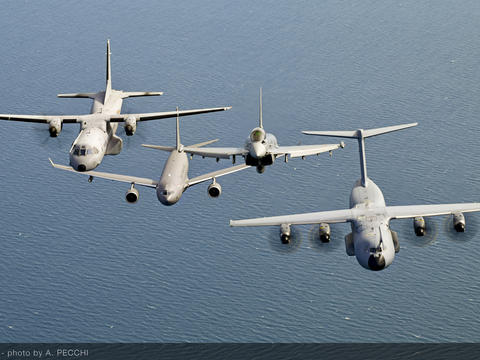
The company’s military aircraft portfolio includes the Eurofighter combat aircraft; the A400M, C295 and CN235 airlifters; and the…
-

Military helicopters
With some 19,000 helicopters delivered in 150 countries, Airbus Helicopters supplies almost one-third of the world’s rotorcraft…
-

Uncrewed Aerial Systems
Airbus UAS: Explore advanced uncrewed aerial systems for military, government and commercial missions, including combat, ISR, and…
-
Military Space
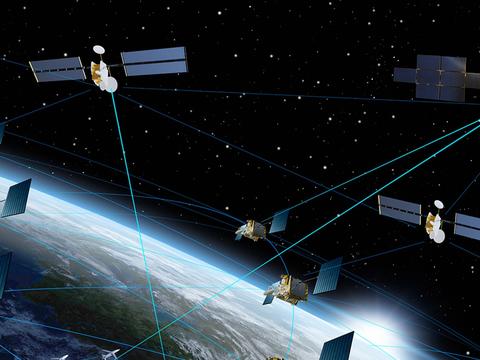
Airbus’ space-based assets ensure constant communication, connectivity and surveillance for military operations on land, at sea,…
-

Connectivity
Airbus specialises in secure, multi-orbit, multi-domain connectivity across the world's land, sea, air and space domains.
-

Intelligence and data
Airbus C5ISR solutions deliver a full picture with advanced command, control, communications, cyber, and iIntelligence…


