
Airbus Global Market Forecast 2026-2045
Aviation industry outlook

Growth driven by diversified urbanisation
Airbus' latest Global Market Forecast (GMF) for the 2026-2045 period provides a comprehensive outlook for the evolution of air transportation. Global air traffic consistently demonstrated an intrinsic robustness. Short-term disruptions, such as regional conflicts and high fuel prices, are not dampening demand long term.
Networks are decentralising. In the next 20 years, urbanisation will shift to smaller cities. The number of smaller cities growing at a significantly faster pace, driving airlines to expand connectivity and establish new direct flights between small and medium city-pairs.
Over the next 20 years, Airbus anticipates a global demand for 42,060 new aircraft. This will not only cater to growth but also drive the replacement of older fleets with flexible, highly efficient new-generation aircraft.
Download documents
2026-2045 English
EN-Presentation GMF 2026-2045
EN_Summary GMF 2026-2045
Airbus Commercial Aircraft GMF 2026-2045
EN-Airbus forecasts traffic growth driven by urbanisation and increased connectivity made possible by aircraft efficiency
2026-2045 Spanish
SP-Presentation GMF 2026-2045
SP-Airbus forecasts traffic growth driven by urbanisation and increased connectivity made possible by aircraft efficiency
SP_Resumen GMF 2026-2045
Airbus Commercial Aircraft GMF 2026-2045
Past years
Presentation GMF 2025-2044
Summary GMF 2025-44
Airbus Commercial Aircraft GMF 2025-2044
Presentation Cargo GMF 2025-2044
Presentation GMF 2024-2043
Take away Messages GMF 2024-2043
Infographic GMF 2024-2043
Airbus Commercial Aircraft GMF 2024-2043
Presentation GMF 2023-2042
Take away Messages GMF 2023-2042
Infographic GMF 2023-2042
Airbus Commercial Aircraft GMF 2023-2042
- 2026-2045 English
- 2026-2045 Spanish
- Past years
EN-Presentation GMF 2026-2045
EN_Summary GMF 2026-2045
Airbus Commercial Aircraft GMF 2026-2045
EN-Airbus forecasts traffic growth driven by urbanisation and increased connectivity made possible by aircraft efficiency
SP-Presentation GMF 2026-2045
SP-Airbus forecasts traffic growth driven by urbanisation and increased connectivity made possible by aircraft efficiency
SP_Resumen GMF 2026-2045
Airbus Commercial Aircraft GMF 2026-2045
Presentation GMF 2025-2044
Summary GMF 2025-44
Airbus Commercial Aircraft GMF 2025-2044
Presentation Cargo GMF 2025-2044
Presentation GMF 2024-2043
Take away Messages GMF 2024-2043
Infographic GMF 2024-2043
Airbus Commercial Aircraft GMF 2024-2043
Presentation GMF 2023-2042
Take away Messages GMF 2023-2042
Infographic GMF 2023-2042
Airbus Commercial Aircraft GMF 2023-2042
Key figures
Airbus Global Market Forecast new aircraft the fleet of tomorrow


Airbus Global Market Forecast air travel expansion driven by demographics
Air travel expansion driven by demographics
Long-term air travel expansion remains anchored in population and GDP growth. The Airbus GMF forecasts passenger traffic to grow 3.9% annually, supported by global GDP growth of 2.6%. By 2045, air traffic will more than double and reach about 10 billion passengers per year.
Key demographic shifts driving this demand include:
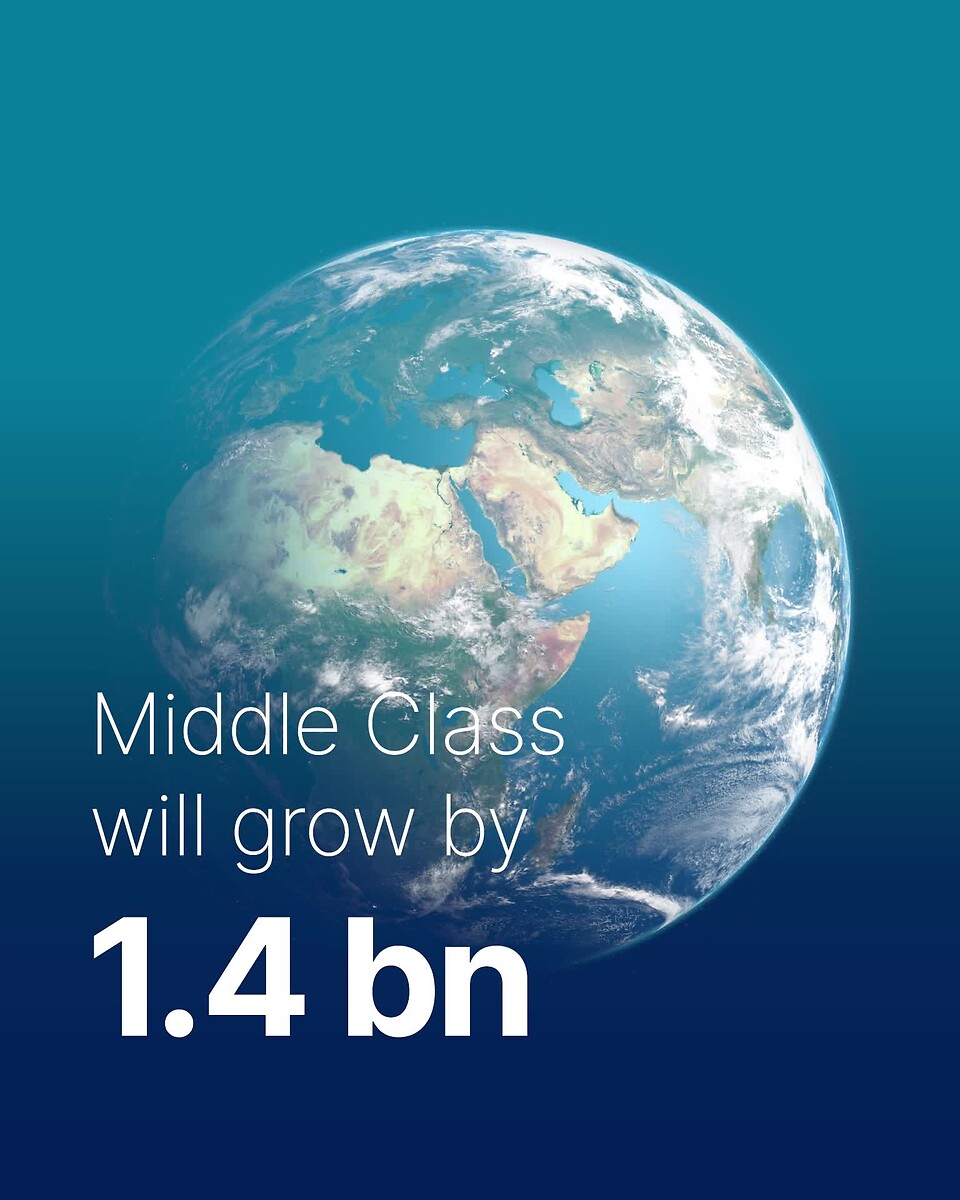
- The middle class demographic, which is the most likely to fly, will increase by 1.4 billion people by 2045, representing a 34% rise.
- Continuous improvements in air transport affordability, enabling a larger share of the global population to fly.
- Increased international migration and diaspora are boosting family-related passenger travel, known as visiting friends and relatives (VFR). Between 2000 and 2024, international migrant populations surged globally, reaching more than 300m recently.


Airbus 2026 GMF - Decentralising networks and new city-pairs
Decentralising networks and new city-pairs
In the next 20 years, urbanisation will shift to smaller cities. The number of smaller urban centres will grow at a significantly faster pace than larger ones. This evolution is decentralising aviation networks, driving airlines to expand connectivity beyond traditional megacities.
Traffic patterns are evolving with robust growth in developing economies like India, Vietnam, Indonesia and Malaysia. This changing landscape relies on new-generation aircraft capabilities to bypass traditional hubs and to provide enhanced economics that make more routes commercially viable. Extra range unlocks direct connections: the A220 links Riga to Tenerife, and the A321XLR connects Dublin to Nashville. For longer sectors, the A330neo and A350 enable routes like Algiers to Kuala Lumpur and Taipei to Phoenix.


Airbus Global Market Forecast new aircraft the fleet of tomorrow
The fleet of tomorrow: 45,550 aircraft
To accommodate projected traffic growth and replace retiring aircraft, the world's passenger fleet is expected to nearly double, growing from 23,310 aircraft at the end of 2025 to 45,550 aircraft by the end of 2045.
Over this period, a total of 42,060 new aircraft will be required. This demand is segmented into:
- 33,920 typically single aisle aircraft
- 8,140 typically widebody aircraft
Of the total new deliveries, almost half, 19,820, will be for replacement.
Replacing older aircraft with newer-generation models is a primary driver for efficiency. This enables airlines to profitably open both lower-density and longer-haul routes.
By 2045, Airbus forecasts the percentage of the global fleet made up of the newest generation aircraft will reach almost 100%, an increase from around 39% in 2026. The continued trend for more cost- and CO₂-efficient aircraft reflects the industry's focus on its decarbonisation journey.


Airbus Global Market Forecast aviation benefits society and economy scientific congress
Aviation benefits society and the economy
Air transport is a key contributor to the global economy and society. It drives global business, contributing to 3.9% of global GDP, and facilitates tourism, with 58% of international tourists travelling by air.
Beyond economic metrics, aviation delivers a profound societal impact by connecting people and fostering development:
- Lifeline to remote communities: Hundreds of remote communities, particularly in Arctic zones, rely primarily on aviation.
- Education and research: It enables over six million international students to access education abroad and facilitates more than 30 scientific congresses every day.
- Family ties: Aviation sustains connections for a growing diaspora, linking over 300 million migrants with their relatives.
A doubling in the global in-service fleet will generate a need for new pilots, technicians and cabin crews, creating careers throughout the aviation ecosystem.
FAQs
What does GMF stand for?
GMF stands for Global Market Forecast
What is the GMF?
The Airbus Global Market Forecast (GMF) is a forecast shared every year to reflect future passenger demand for air travel and aircraft deliveries over the next 20 years. The GMF is aircraft agnostic - ie it does not forecast the aircraft by models.
Is the GMF predicting forecasts per aircraft model?
The GMF is aircraft agnostic and does not forecast deliveries per aircraft model but demand by aircraft size.
What are the criteria taken into account in the GMF?
To determine the future demand for air travel, the Airbus GMF connects the drivers for air transport demand (macroeconomic, demographics…) with air transport affordability (expected yields evolution, taking into account SAF and CO2 prices).
What are the fastest growth regions?
- The fastest growing regions will be Asia Pacific; notably India, China and several emerging economies such as Vietnam, Indonesia…
- The Middle-East is expected to continue on a steady growth trajectory.
- Central Asia will also grow rapidly, taking advantage of evolving traffic flows.
What are the fastest growth flows?
- Domestic and international flows from India, China, south east Asia, central Asia will be among the fastest growth flows
- Domestic India 9.3% is the fastest.
Our latest news
Read more
-

Avolon orders 35 Airbus A330-900 and 75 A320neo Family aircraft
Press Release
Commercial Aircraft
Avolon, a leading global aviation finance company, has placed a firm order for 110 Airbus aircraft, comprising 35 A330-900 and 75 A320neo Family aircraft. -

Biman Bangladesh Airlines places firm order for A350-900 and A321neo Airbus aircraft
Press Release
Commercial Aircraft
-

FLYONE Armenia orders two Airbus A321neo
Press Release
Commercial Aircraft
-

A350F first flight: new freighter aircraft takes to the sky
Web Story
Commercial Aircraft
-

Airbus A350F freighter successfully performs its maiden flight
Press Release
Commercial Aircraft

You might also be interested in
Discover more
-

Airbus Global Services Forecast 2025-2044
Explore the Airbus Global Services Forecast (GSF) for 2025-2044. Discover key insights into the growing demand for aviation…
-

Orders and deliveries
Airbus releases commercial results in a monthly “Orders and Deliveries” report, which lists all firm aircraft transactions.
-

Key documents
Airbus product sheets, backgrounders, and other documents
-
Airbus Passenger Aircraft
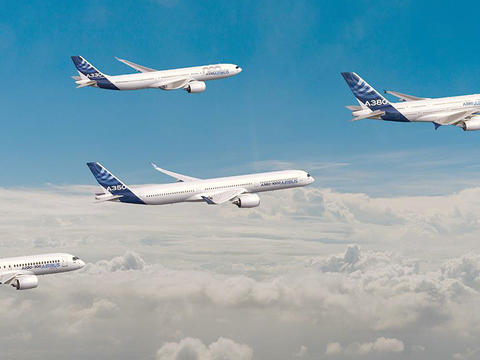
Explore Airbus passenger aircraft. Discover comfortable, safe & efficient flight with our A220, A320, A330, A350 & A380 families…
-
Airbus Freighter Aircraft
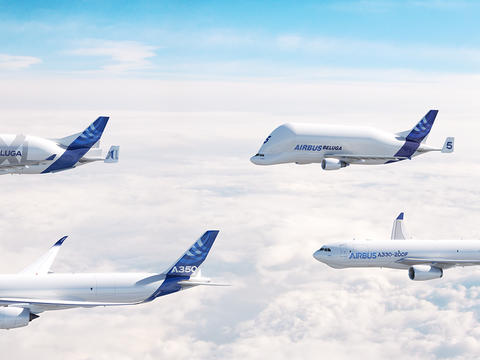
Discover Airbus cargo aircraft. Our family includes the new A350F, efficient P2F conversions, and the outsize Beluga super…


