
Eurofighter in Spain: Safeguarding skies and driving industry
The Eurofighter not only ensures national security, it is also a catalyst for economic growth and innovation – both today and in the future.

A pillar of Spanish and European security
The Eurofighter is a cornerstone of Spain's air defence and — as Europe's most frequently flown combat aircraft — a key pillar of European security. This multi-role fighter jet is suitable for both air combat and ground attack missions. With 69 aircraft currently in service, the Eurofighter forms the backbone of the Spanish combat aircraft fleet.
Airbus is a key industrial partner in the Eurofighter programme. The Company manufactures and integrates components for the Spanish Air and Space Force at the final assembly line (FAL) located in Getafe, near Madrid. Production of 45 new jets is currently underway following the formalisation of the Halcón I and Halcón II contracts. Once all these aircraft enter service, the Spanish Eurofighter fleet will expand to 114 aircraft, reinforcing Spain's position at the heart of NATO.
Always on duty to protect sovereign airspace
The Eurofighter enables fast and decisive action when it matters most. Whether it is performing Quick Reaction Alert (QRA) duties to protect national airspace from the air bases of Morón (Seville), Los Llanos (Albacete) and Gando (Gran Canaria Island) or defending NATO's eastern flank in the Baltics alongside European allies, the Eurofighter is a vital asset for those who protect us every day.
The Eurofighter in action


Eurofighter Halcon
Technology leader and economic catalyst
The Eurofighter programme
The Eurofighter combines decades of experience in military aircraft construction. It secures more than 100,000 European jobs in more than 400 companies.
The Eurofighter is a symbol of technological sovereignty. It enables Spain and its European partner nations to retain their ability to develop and operate complex air combat systems independently.
Impact of Eurofighter on the Spanish economy

Crafting the Eurofighter
Enhancing Eurofighter capabilities for long-term leadership
A constant evolution
The Halcón I programme
Signed in June 2022, this contract covers 20 latest-generation Eurofighter jets (16 single-seat and four twin-seat variants) equipped with the new electronic E-Scan radar to replace legacy fleets.

The Halcón II programme
Signed in December 2024, this agreement adds another 25 jets (21 single-seat and 4 twin-seat variants), boosting tactical airpower capabilities through advanced avionics and enhanced weapon systems.

Long Term Evolution
As part of the aircraft's continuous development, the Eurofighter will be connected to a secure combat cloud, enabling it to interact seamlessly with other platforms and ensuring its leading edge through the 2060s.

Video Gallery
The Halcón programmes usher in a new era for the Spanish Air and Space Force.
-
 Eurofighter Halcon II
Eurofighter Halcon II
-
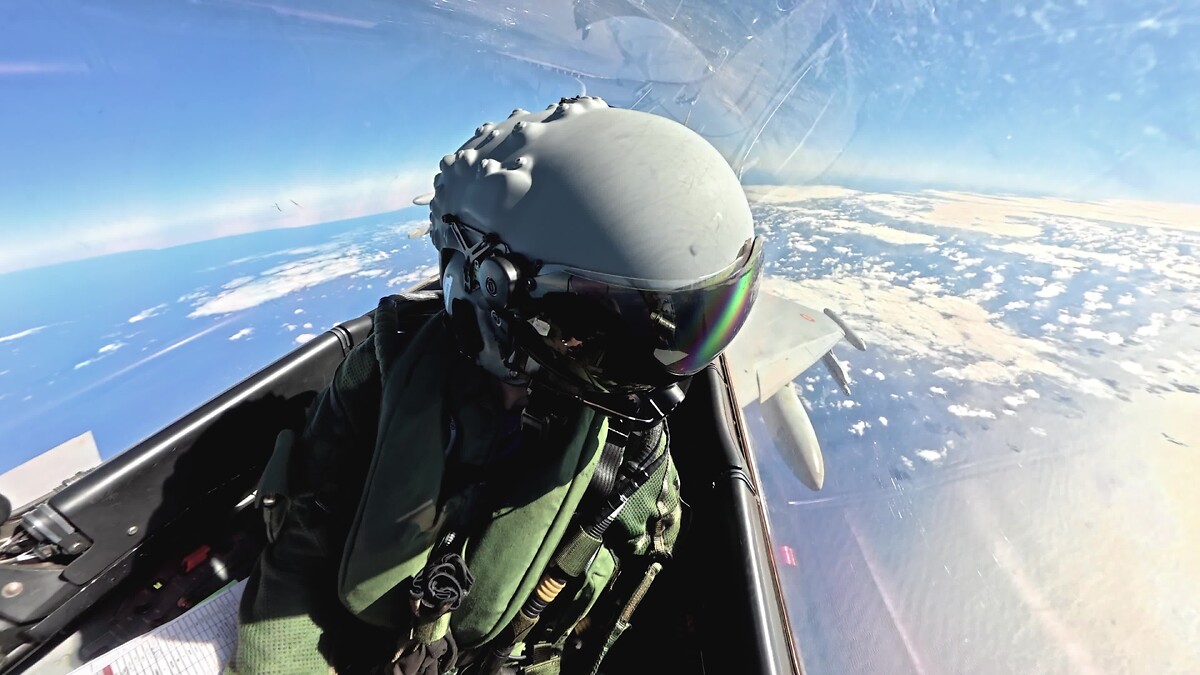 Spanish Eurofighter Arrival to Gando
Spanish Eurofighter Arrival to Gando


Eurofighter Spanish Air Force
The stepping stone for the Next Generation Weapon System
To 2040 and beyond
From the cockpit of the future to cross-platform connectivity and the interaction of crewed and uncrewed aerial systems, the Eurofighter is being used to develop the key functions that will be required in the Next Generation Weapon System from 2040 onwards.
The Eurofighter is not only a trailblazer, but will also remain an integral part of military operations beyond 2060. It will take on vital new roles, for example as a command node for uncrewed collaborative combat assets.
-


Airbus at Spain's 'National Day'
-


Ocean Sky Eurofighter
-


Ocean Sky Eurofighter
-


Eurofighter Spanish Air and Space Force
-


Eurofighter Spanish Air and Space Force
-


Eurofighter Spanish Air and Space Force
-


MRTT EUROFIGHTER REFUELLING


Reports for download
Docs
Eurofighter Impact Assessment across Germany, Spain, Italy, and the United Kingdom, covering historical data (2013–2023)
Impact of the Eurofighter project on the Spanish economy
Docs
Eurofighter Impact Assessment across Germany, Spain, Italy, and the United Kingdom, covering historical data (2013–2023)
Impact of the Eurofighter project on the Spanish economy

The leading swing-role fighter
Learn more about the advanced technology and global footprint of Eurofighter.

Airbus Defence in Spain
Leading Spain's military air power, rotorcraft, space and next-generation defence technology for Europe.
Frequently Asked Questions
Eurofighter
Here is an explanation of the most important terms related to the Eurofighter.
What are Tranches?
Tranches refer to the production lots of the Eurofighter that meet the technological standard at the time of delivery. The Spanish Air and Space Force has progressively introduced several production lots, moving from the basic capabilities of Tranche 1 to the multi-role configurations of Tranches 2 and 3.
The 45 new jets ordered via the Halcón contracts introduce Tranche 4 and Tranche 4+ standards, featuring the cutting-edge active electronically scanned array (AESA) radar, enhanced weapon systems capable of operating Brimstone III and Full Meteor, new sensors and improved connectivity.
What is the Halcón programme?
This strategic procurement initiative consists of two consecutive contracts, Halcón I (signed in June 2022) and Halcón II (signed in December 2024). Designed to modernise the air power of the Spanish Air and Space Force, the programme secures the acquisition of 45 latest-generation Tranche 4 and Tranche 4+ Eurofighters.
These new aircraft will replace the legacy fleet of Boeing EF-18 Hornets currently operating at Gando Air Base on the Canary Islands and Torrejón Air Base on the mainland, ensuring seamless continuity in national sovereignty and NATO airspace protection.
What is the industrial contribution of Airbus in Spain to the Eurofighter programme?
Industrial operations in Spain are responsible for the design, manufacturing and assembly of the aircraft's right wing for all Eurofighters produced globally, alongside leading edge components, trailing edge slats, and flight control surfaces. Primary composite structural parts are manufactured at Illescas (Toledo) and Cádiz, while mechanical machining and detailed sub-assemblies take place in Tablada (Seville). All Spanish Eurofighters undergo final assembly, integration, flight testing and delivery at the Getafe site. Airbus also provides in-service support directly from Spanish air bases.
What is the ECRS (European Common Radar System)?
The ECRS is a state-of-the-art active electronically scanned array (AESA) radar system that represents a major technological leap over legacy mechanical scanning radars. It allows the Eurofighter to detect, track and engage multiple air and ground targets simultaneously at longer ranges, even in environments with heavy electronic jamming.
Under the Halcón contracts, Spain's new Eurofighters will be equipped with the ECRS Mk1 variant, featuring significant industrial development and production involvement from Spanish technology partners such as Indra.
What does LTE stand for?
LTE stands for Long Term Evolution. This mid-life upgrade is designed to keep the Eurofighter at the cutting edge of technology until 2060 and beyond. It includes fundamental improvements to the system architecture, computing power, sensor technology and cockpit to prepare it for future missions and integration into systems such as Europe’s Next Generation Weapon System.
What is the Getafe facility of Airbus?
Getafe is the industrial heart of Airbus Defence and Space in Spain for military aircraft production. It serves as the national final assembly line (FAL) where Spanish Eurofighters are assembled, tested, and delivered, while also acting as a key manufacturing hub for the global Eurofighter consortium by producing the right wing for every single Typhoon built.