
H135

A versatile light twin-engine market leader
The H135 is a light twin-engine helicopter that combines compact design with Airbus’ Helionix avionics for emergency medical services, law enforcement, utility, private business (PBA), military training and offshore energy operations. With the lowest operating and maintenance costs in its class and inspection intervals of 500 flight hours, the H135 delivers mission flexibility where operational efficiency and confined area access are critical.
Equipped with FADEC-controlled engine options (Safran Arrius 2B2 Plus or Pratt & Whitney PW206B3) and featuring a 4-axis autopilot with flight envelope protection and synthetic vision system, the H135 maintains availability rates exceeding 95% for critical missions. Part of a family with over 1,600 aircraft delivered to 325+ operators globally and 8 million flight hours accumulated, the platform has established a proven operational record across decades of civil and governmental service including more than 700 dedicated EMS helicopters worldwide.


Stat Medevac-DSC_6768a
An outstanding performer
Fitted with a bearingless main rotor, Airbus’ signature Fenestron® shrouded tail rotor, the H135 provides best-in-class performance throughout its flight envelope.
Two full authority digital engine control (FADEC)-equipped engine options are available: Safran Helicopter Engines’ Arrius 2B2 Plus and Pratt & Whitney Canada’s 206B3. Both of these reliable turboshaft power plants provide outstanding performance and vital power reserves – even in one engine inoperative (OEI) scenarios – along with low fuel consumption.
As one of Airbus’ most successful lightweight rotorcraft, the H135 is known for its endurance, compact build, low sound levels, reliability, versatility, and cost-competitiveness. The H135 comes with the lowest operating and maintenance costs within the twin-engine category. It also can perform varied missions, and can land almost anywhere, particularly in high and hot conditions, while carrying more payload over longer distances than other helicopters in its category (weight class).


Airbus H135 cockpit
H135 Instrument Panel HELIONIX System step 2
Enhanced safety and discretion
The H135’s state-of-the-art cockpit with its new 4-axis autopilot provides the highest-possible safety levels. The Helionix® avionics system designed by Airbus offers operators undisputed superiority for in-flight envelope protection, pilot assistance and situational awareness – resulting in unprecedented flight safety levels. Helionix is also available on the H145, H175, and H160, making the H135 an effective trainer, and enabling operators to maximize pilot training efficiency across their fleets.
Further contributing to operational safety are the rotorcraft’s high-set main rotor and the Fenestron® shrouded tail rotor. They provide enhanced safety margins to the pilot and improved performance even in one engine inoperative scenarios.
As one of the quietest twin-engine helicopters, the H135’s sound footprint is markedly lower than that of other rotorcraft in the same category - an asset for customers operating in densely populated areas.


Phoenix Heli-Flight's Airbus H135
Ready to fly
The H135’s simple design makes maintenance fast and easy, ensuring reliable dispatch, less down time and lower operating costs.
The H135 is the benchmark for maintenance costs, thanks to its long inspection intervals, intermediate inspection at 500 flight hours, and periodic inspections every 1,000 hours.
With the lowest direct operating costs of any twin-engine rotorcraft, the H135 is the most attractive helicopter to operate in its class.
The H135 accommodates a night vision imaging system (NVIS), and can be fitted with a night vision goggle (NVG)-friendly cockpit, cabin layouts and exterior lighting.
Its high level of availability and easy maintenance assists the H135 in such autonomous operations as helicopter emergency medical services (HEMS), where a technician may not be located on base or stationed nearby.
Media gallery
-


H135 Spanish Armada Navalisation Trials
-
 27.48 s
H135 presentation video
-


H135 Mountain Rescue
-
 0:00:53
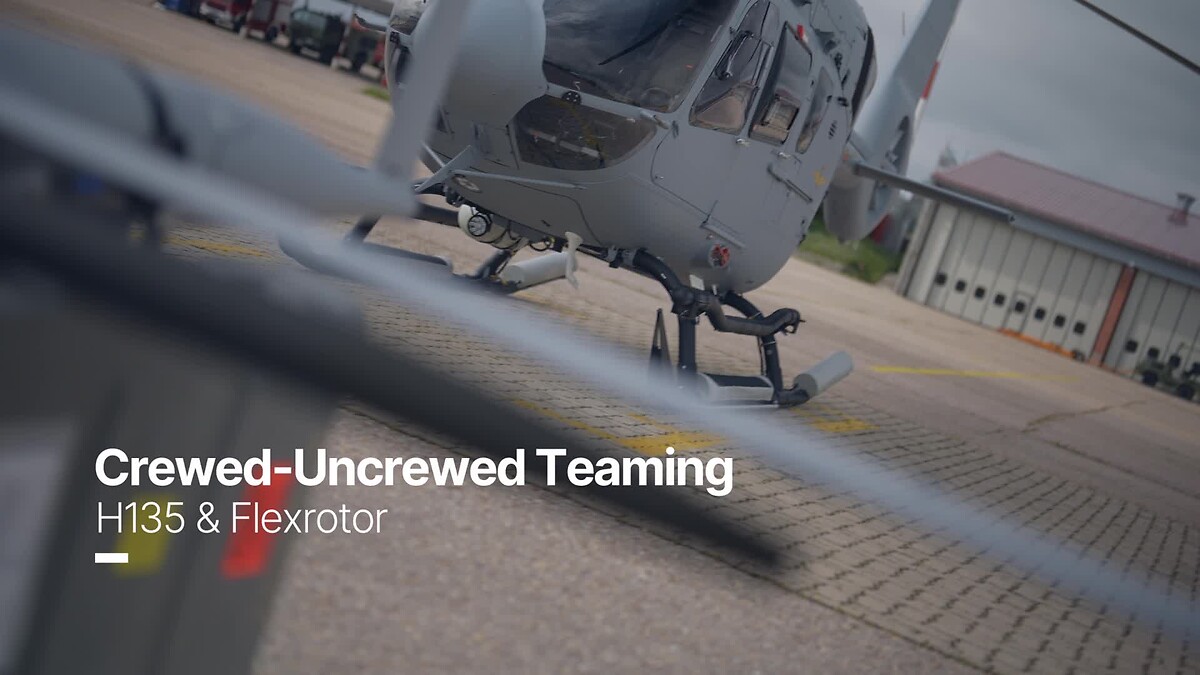
Crewed-uncrewed teaming between the Airbus H135 and Flexrotor
-


EXPH-2262-108


Frequently asked questions (FAQ)
H135
What is the Airbus H135 used for?
The H135 is a multi-role light twin-engine helicopter optimised for emergency medical services (EMS), law enforcement, military training, utility, offshore energy operations requiring human external cargo (HEC) capability, and corporate or VIP transport as the ACH135 variant. With more than 700 EMS helicopters in service worldwide, it is the global reference in this segment. It is also the fleet leader in the law enforcement segment. The helicopter’s compact footprint, low operating costs, Helionix avionics, and availability rates exceeding 95% support reliable operations across diverse and demanding mission profiles.
What percentage of HEMS helicopters are Airbus helicopters?
Worldwide, more than 50 percent of the roughly 3,000 aircraft are Airbus helicopters. The H135 is the most successful, followed by the H145.
How many passengers can the H135 carry?
The H135 accommodates one or two pilots and up to six passengers in standard transport configurations, with multiple cabin layouts available depending on mission requirements. Emergency medical service (EMS) configurations typically support two pilots, one stretcher patient, and two medical attendants, while law enforcement layouts carry two crew members and one systems operator with dedicated mission equipment space.
What is the H135’s range and endurance?
The H135 offers a maximum range of up to 626 km (338 nautical miles) with standard fuel tanks and a maximum endurance of up to approximately 3 hours 34 minutes. This capability supports missions such as inter-hospital transfers, law enforcement patrols, and offshore energy operations without refuelling. With optional auxiliary fuel tanks and the Alternate Gross Weight (AGW) certification increasing maximum takeoff weight by 120 kg, operators can extend range by up to 75 nautical miles or endurance by approximately 40 minutes under standard conditions.
What is the Helionix upgrade for the H135?
Helionix is Airbus’ integrated avionics suite designed to enhance safety and reduce pilot workload through advanced automation. It includes a 4-axis autopilot, flight envelope protection, synthetic vision system (SVS), and pilot assistance functions supporting single-pilot IFR operations. Helionix also improves fleet commonality with the H140, H145, H175, and H160, enabling cross-platform training efficiencies.
Can the H135 be flown single-pilot?
Yes, the H135 is certified for single-pilot instrument flight rules (IFR) operations when equipped with the Helionix avionics suite. The system’s 4-axis autopilot, flight envelope protection, and synthetic vision reduce pilot workload and enhance situational awareness.
What engine powers the H135?
The H135 is powered by two FADEC-equipped turbine engine options: the Safran Arrius 2B2 Plus or the Pratt & Whitney PW206B3. Both engines provide strong performance margins and vital power reserves during one-engine-inoperative scenarios. Dual-channel full authority digital engine control (FADEC) systems ensure automatic power management, reduced pilot workload, and optimised fuel consumption across the flight envelope.
What makes the H135 suitable for EMS operations?
With more than 700 EMS helicopters deployed worldwide, the H135 is the global fleet leader in emergency medical services. Aft clamshell doors enable efficient stretcher loading, while the spacious cabin allows direct patient access for critical interventions. Configurations comply with European EN13718 standards and typically support two pilots, one stretcher patient, and up to three medical attendants. The compact design enables operations in confined areas, while availability rates exceeding 95% support dependable emergency response. The Fenestron and the high set main rotor and low external sound emission (quietest aircraft in production) make it ideal for HEMS operations.
How reliable is the H135?
The H135 consistently delivers availability rates exceeding 95%, supported by a simple, mature design and optimised maintenance programme. The fleet has accumulated more than 8 million flight hours, with over 1,600 aircraft delivered to more than 325 operators across more than 65 countries. Maintenance intervals include intermediate inspections at 500 flight hours and periodic inspections every 1,000 hours, supporting predictable operating costs and reliable mission availability.
Is the H135 equipped to perform night missions?
Yes. The H135 can be fitted with a night vision goggle (NVG)-friendly cockpit, cabin layouts and exterior lighting.
What makes the H135 unique?
The H135 is the right fit for operators who are looking for a combination of compact dimensions for confined-area access with twin-engine safety and the low operating costs. Helionix avionics enable single-pilot IFR operations while supporting cross-platform training commonality with larger Airbus helicopters. As the worldwide twin-engine fleet leader in law enforcement and with extensive EMS adoption, the H135 offers proven mission versatility, supported by more than 8 million flight hours accumulated across hundreds of operators worldwide.
What is the difference between the EC135 and H135?
The EC135 and H135 refer to the same helicopter family under different naming conventions following Airbus Helicopters’ 2014 rebranding from Eurocopter.
Topics in focus
-
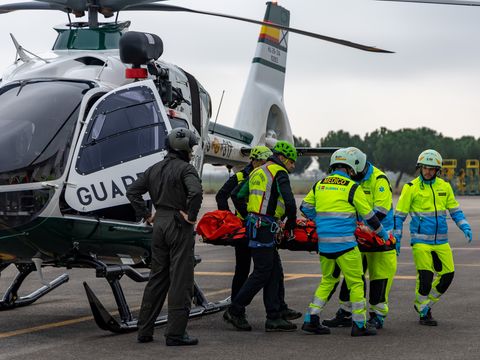
H135 missions
The H135 is equipped to perform a range of missions, including emergency medical services, offshore energy, law enforcement, and…
-
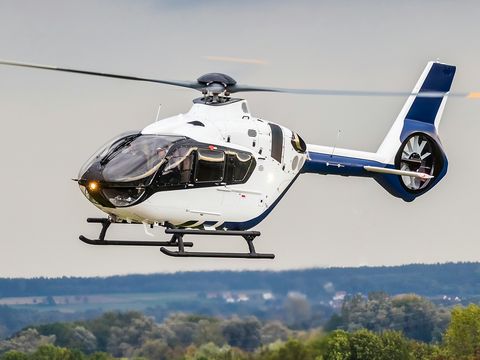
H135 technical information
Backed by experience and a long heritage, over 1,600 twin-engine H135s have been delivered and are in service in more than 65…
-
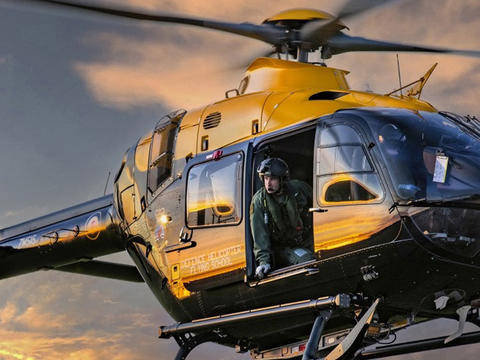
H135 military training
The three-tonne-class H135 rotorcraft is the perfect platform for military pilot training – from evolving aviators’ skills to…
-

Civil helicopters
From single and twin-engine light and medium helicopters to those in the eleven-tonne class, Airbus has the right product for a…
-
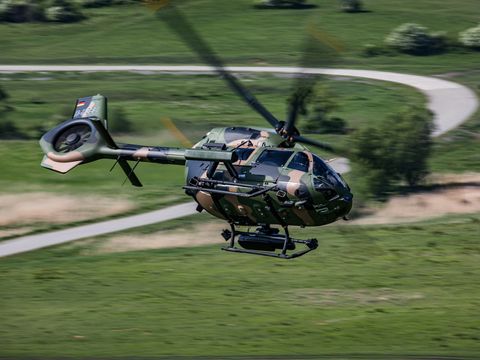
Military helicopters
With some 19,000 helicopters delivered in 150 countries, Airbus Helicopters supplies almost one-third of the world’s rotorcraft…


The latest on the H135
-

Kasi Healthcare signs for two Airbus H135 helicopters to advance air medical…
Press Release
Helicopters
Airbus Helicopters and Kasi Healthcare have signed an agreement for the procurement of up to two Airbus H135 helicopters for emergency medical services. -

Airbus delivers first H135 for Canada’s Future Aircrew Training program
Press Release
Helicopters
-

Airbus demonstrates multi-domain capabilities with Spanish Navy crewed-uncrewed…
Press Release
Helicopters
-

Japan’s National Police Agency bolsters law enforcement fleet with order for three…
Press Release
Helicopters
-

ADAC Luftrettung and Airbus sign framework contract for H135, H140 and H145…
Press Release
Helicopters


Rotor magazine
Stay up to date with our latest innovations and get the latest news from civil and military helicopter operators carrying out vital missions around the world.