
Cleared for departure: the end of the Airbus UpNext Optimate demonstrator
The Airbus UpNext Optimate demonstrator tested an automated, gate-to-gate mission on a commercial aircraft

For the past three years, a curious sight could be seen at Toulouse-Blagnac and Paris-Charles de Gaulle airports: a sleek, truck rolling along the active taxiways. Fitted inside with a virtual replica of an Airbus A350 flight deck, the ‘Optibus’ was the fully electric, experimental vehicle at the heart of the Airbus UpNext Optimate demonstrator.

Building upon the foundational work of previous demonstrators like Airbus UpNext DragonFly, Airbus UpNext Optimate’s goal was to demonstrate an automated, gate-to-gate mission profile on a commercial aircraft. Specifically, it focused on testing end-to-end smart automation across four main areas: taxiing, pilot assistance, dynamic trajectory protection and digital communication systems. Now, after more than 500 hours on the tarmac and 14 hours in the air, the Airbus UpNext Optimate demonstrator has reached the end of its test campaign – but not before teaching us a lot about how we can improve ground efficiency at airports.
From the virtual world to the runway
With the global commercial aircraft fleet projected to nearly double over the next two decades, the physical constraints of airports mean ground congestion will progressively increase: runways, taxiways and gate capacities cannot easily be expanded at the same rate. This means the many variables that must be managed when an aircraft is on the ground – taxiway navigation, ground vehicle traffic and air traffic control (ATC) instructions, to name just a few – will require an increasing amount of attention from the flight crew.
The Airbus UpNext Optimate demonstrator aimed to alleviate that complexity by evaluating how smart automation, AI and advanced sensors could support pilots from the beginning to the end of each journey. This was tackled through a three-tiered strategy that began with virtual simulation and algorithmic design before moving on to ground-testing with the Optibus. The last stage was full-scale trials on an A350-1000 test aircraft, to test the automation sequences under realistic operational flight conditions.

This incremental strategy had several benefits. “This demonstrator allowed us to evaluate, de-risk and mature cutting-edge technologies at an accelerated pace,” says Jonathan Rigaud, Airbus UpNext Optimate Director.
“By testing early and incrementally – first digitally, then on the Optibus, and finally in the air – we were able to refine our algorithms with real-world feedback on safety and operational improvements while reducing fuel burn associated with flight testing.”
Integrating innovative operational technologies
The first area of exploration focused on high-precision automation of taxiing. Multi-sensor data (computer vision, LIDAR, and four-dimensional radar, among many others) was complemented by experimental quantum sensing to achieve centimeter-level positioning. In addition to its precision, quantum sensing can offer robust, accurate global positioning in challenging or remote operational environments where satellite-based global navigation signals may be compromised or non-existent.
Meanwhile, inside the flight deck, an AI assistant analysed traffic and weather feeds as well as airport constraints to anticipate routing changes and recommend optimal taxi and cruise trajectories. Crucially, these automated trajectories were fully overridable by the pilots, demonstrating Airbus’ commitment to human-in-the-loop AI.
Airbus UpNext Optimate also demonstrated how communication between automated systems, flight crews, air traffic control and airline operations control centres could be reshaped to improve efficiency. Dynamic routes were computed and then displayed to all players.

To address ‘dead’ connectivity zones around heavy airport infrastructure, the demonstrator tested different hybrid arrangements of high-bandwidth 5G, satellite communications and traditional radio channels. This digital link serves to improve safety by increasing positioning precision for auto-taxi, and during flight it enables real-time collaborative decision making, weather avoidance and automated diversion planning to optimise fuel efficiency.
The ground testing of the Optibus provided many practical insights that allowed for various improvements to be made before any technology was moved onto the flight test aircraft. For example, the computer vision was refined to better distinguish between runway features, and sensors were calibrated to adjust to glare from low sun angles and heat shimmer on the tarmac. Real-world testing also permitted the establishment of a dynamic envelope to avoid collision on ground.
Empowering future pilots
While the sun is setting on Airbus UpNext Optimate, the pilot-centric philosophy of Airbus’ approach to automation has only been reinforced. As airport density increases, smart automation will play a key role in enhancing and empowering human expertise – not replacing it. The technology tested by this demonstrator allows flight crews to prioritise high-level strategic decisions, passenger safety and mission optimisation.

The operational lessons learned from this project will feed into a variety of Airbus engineering programmes. By demonstrating that intelligent automation can safely streamline routine ground navigation and in-flight decision-making while remaining pilot centric, the Airbus UpNext Optimate demonstrator has paved the way for greater automation to be integrated in the cockpits of tomorrow.

Airbus NOVA Newsletter
Your go-to source for the latest stories on disruptive technologies and ground-breaking aerospace projects that will transform the way we fly.
-


Airbus UpNext Optimate End of Demonstrator
-


A350-1000 MSN59 Upnext Optimate
-


Airbus UpNext Optimate End of Demonstrator
-


Airbus UpNext Optimate End of Demonstrator
-


Airbus UpNext Optimate End of Demonstrator
-


Airbus UpNext Optimate End of Demonstrator
-
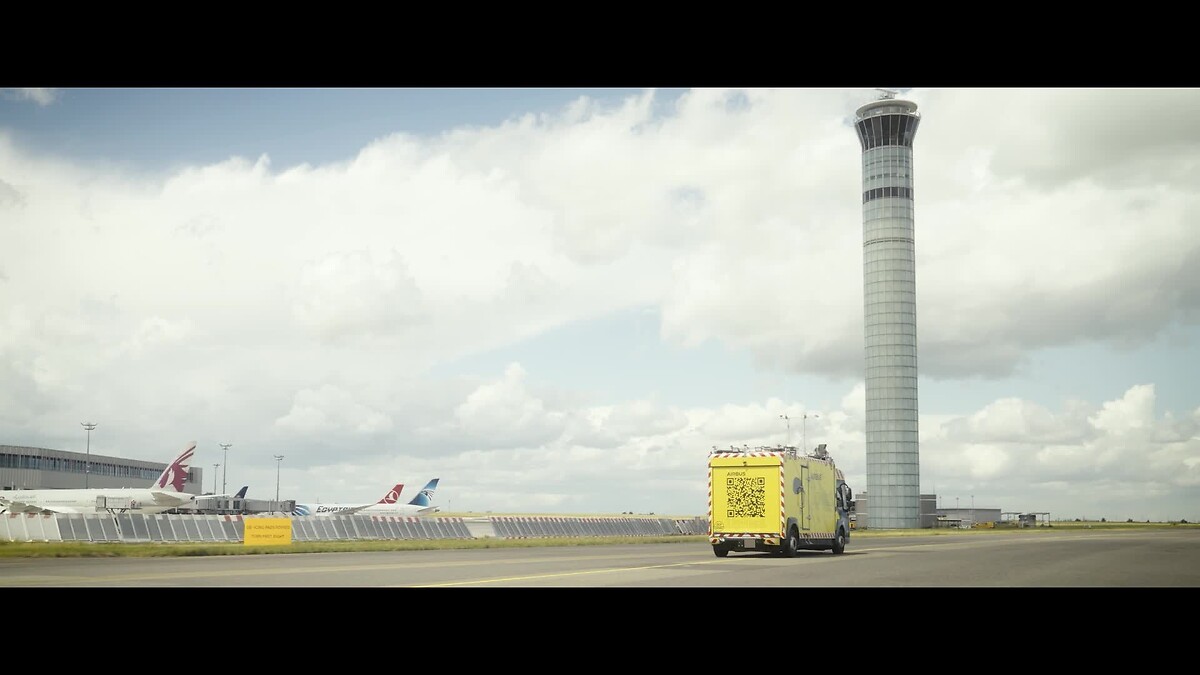
Airbus UpNext Optimate End of Demonstrator
Airbus UpNext Optimate End of Demonstrator video


Continue reading
-
Airbus UpNext
Learn more about Airbus UpNext, which builds and tests flight demonstrators to mature breakthrough aerospace technologies faster…
-

Innovation ecosystem
Airbus cultivates an innovation ecosystem where internal experts and external stakeholders come together to translate ideas into…
-

Meet Optimate, an extra pair of eyes and ears for pilots
Meet the Flying Truck, Airbus’ latest autonomous vehicle. This cockpit on wheels is designed to show how smart automation can …


The latest innovation news
Continue reading
-

Airbus elevates hybrid-electric integration with LEIA Project
Press Release
Innovation
Airbus elevates hybrid-electric integration with LEIA Project -
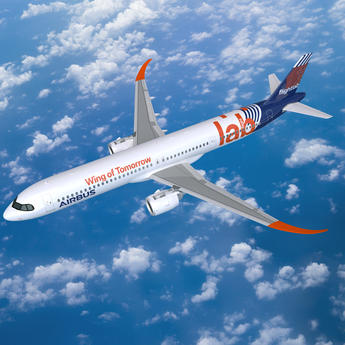
Airbus launches new flight test programme for Wing of Tomorrow
Press Release
Innovation
-

Air Canada and Airbus launch joint initiative to scale domestic Canadian SAF and…
Press Release
Innovation
-

Beyond the XLR: Stepping-up the next design evolutions across the A320 Family
Web Story
Commercial Aircraft
-

Airbus and MTU Aero Engines to create a joint venture to develop a fully electric…
Press Release
Innovation

