
Airbus H140 flight testing: Hot and high expectations in the U.S.

In June, Airbus Helicopters’ newest rotorcraft arrived in the United States for ‘hot and high’ testing as part of its certification campaign. H140 Chief Engineer Christian Wehle explains how Airbus Helicopters’ latest machine is performing under pressure.
What were the objectives of this H140 test campaign? Where did you go and what did you test?
Christian Wehle: This campaign was actually three campaigns in one. We started on the 13th of June and we just finished on the 8th of October. Our first location was Lake Havasu City, sitting in the Mojave Desert south of Las Vegas. In June and July, temperatures reached 45 degrees celsius and above, so we tested the aircraft under extremely hot conditions.
We then transferred to Leadville, in Colorado’s Rocky Mountains. The airport is already at 10,000 feet barometric altitude. Here we test in extremely high altitude conditions. On top of Mount Pennsylvania, with altitudes of 13,000 feet and above, we are pushing the aircraft to the extremes in terms of controllability and engine performance required for hover, take-off and landing at high payloads. The third location was Albuquerque, which sits in the high desert along the Rio Grande. There, we tested intermediate altitudes, around 7,000-9000 feet density altitude: an altitude of critical importance for future H140 customers.

The H140 in Albuquerque, New Mexico, where the third leg of the campaign took place
How do you evaluate performance of the H140 during these tests?
Christian Wehle: Essentially, we have prediction models for every aspect and we see how the aircraft performs compared to our calculations and simulations. Reducing aircraft gross weight directly enhances performance during high altitudes. So, we are aiming for a certain target weight at a certain altitude and wind condition, and then we check it. In an incremental approach, we start flight test activities at a lower weight until we have reached a defined vertical speed. Very often we reach values very close to our predictions. This underlines our engineering capabilities and experience we have built up over the years.
The primary value of these tests lies in generating reliable and approved performance data. This data is ultimately incorporated into the flight manual performance part and performance apps. It provides operators and customers with precise and safe data for all points inside the certified envelope of the aircraft.

Testing intermediate altitudes in Albuquerque
How demanding is it performing these tests?
Christian Wehle: This was one of the most extensive and rigorous rotorcraft certification campaigns we have ever executed. Supported by a 40-person flight test, prototype mechanics and quality assurance team, we logged over 130 flight hours and completed more than 800 safe test landings.
The environmental and physiological demands were extreme. Flight crews routinely operated in high ambient heat, managing the thermal hot soaking of the airframe prior to engine start and ground operations.
Our high-altitude testing in Albuquerque and Leadville required zero-wind conditions to accurately evaluate hover performance. Capturing these specific meteorological windows dictated a demanding operational tempo. Crews frequently departed before sunrise for early test flights, running dual-shift operations that extended until after sunset, when the aircraft was finally post-flight-inspected for the day.
Despite these severe environmental factors and extended duty days, the H140 demonstrated very good reliability. This sustained performance validates the platform’s system maturity and provides us with absolute confidence as we approach entry into service and commence deliveries to operators.

Airbus H140 set against New Mexico's rocky terrain
What are the next steps for certification and entry into service for the H140?
Christian Wehle: Our very first prototype is being prepared these days for the “tie down test”, an extensive ground endurance test intended to test transmissions, rotors, control system and drive shafts under rigorous test conditions while the aircraft is anchored securely to the ground. We intend to commence this test mid 2027.
Regarding flight operations, we are currently operating two prototypes with a third prototype joining early next year the certification flight test campaign. The prototype that was in the U.S. has meanwhile returned to Donauwörth in preparation for finishing certification activities in extreme cold conditions in Finland and Norway in the upcoming winter.
While there is still substantial work ahead of us to achieve certification, our progress remains in line with our targeted delivery of the first aircraft to customers in 2028.

Hot air balloons float in the distant sky behind the Airbus H140

Rotor magazine
Stay up to date with our latest innovations and get the latest news from civil and military helicopter operators carrying out vital missions around the world.
Discover more
H140 hot and high tests
-


Airbus H140 hot and high test campaign in the U.S.
-


Airbus H140 hot and high test campaign in the U.S.
-


Airbus H140 hot and high test campaign in the U.S.
-


Airbus H140 hot and high test campaign in the U.S.


Discover more
-
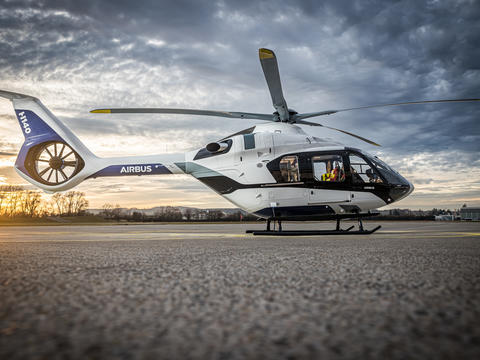
H140
The Airbus H140 is a new 3-tonne class light twin helicopter with a five-blade rotor, combining innovative technology and…
-
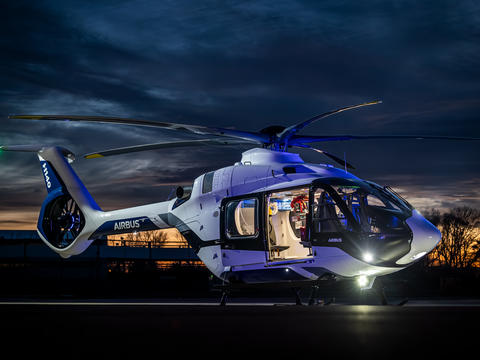
H140 missions
The H140 supports emergency medical services, commercial transport for 6 passengers, and corporate aviation with enhanced comfort…
-

Helicopters
Airbus delivers the most efficient helicopters to customers who serve, protect, save lives and carry passengers in demanding…


Related news
Continue reading
-

Airbus H140 flight testing: Hot and high expectations in the U.S.
Web Story
Helicopters
Airbus Helicopters’ H140 recently completed hot and high testing in the U.S. Chief Engineer Christian Wehle details how it performed under pressure. -

How ENGRT meets future NATO capabilities: Designing a future military helicopter
Web Story
Helicopters
-

Amid the flames
Web Story
Helicopters
-

Romania orders 12 Airbus H225M multirole military helicopters
Press Release
Helicopters
-

Shaping the future of flight testing
Web Story
Helicopters
