
Canada’s CT-153 Juno gets ready for training

There is a global trend towards increasing military spending, and Canada is investing heavily to ensure its air force is ready for the variety of challenges it might face. The initial phase focuses on securing the best possible helicopter for its training programme.
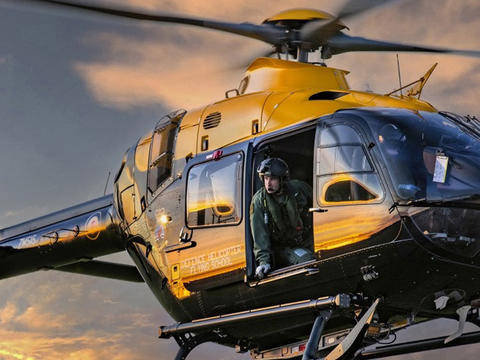
June 2026 saw the first delivery of the Airbus H135 to the Royal Canadian Air Force (RCAF), marking the launch of its Future Aircrew Training (FAcT) programme. Designated the CT-153 Juno, the helicopter’s name reflects its importance within the history of the nation's military. The Juno’s livery is composed of a dark blue mixed with historic "training yellow." This was deliberately chosen to ensure that one of the proudest chapters of Canadian aviation history, the British Commonwealth Air Training Program, where Canada played a massive role in preparing Allied pilots during the Second World War, remains a visible part of its present. The Juno aspect also calls to mind the critical role Canada had in the D-Day landings at Juno beach.

Today, geopolitical tensions are as fraught as they have been since that global conflict. With active warfare in Europe and the Middle East, countries around the world are assessing if they have the right tools for the job. Canada is no different. SkyAlyne placed an order for 19 H135 helicopters to rejuvenate the RCAF’s training fleet, the first of which has now been received.

How to be the best? Training
The arrival of this aircraft is part of a complete reset of the RCAF’s training pipeline. With a total investment of 11.2 billion Canadian dollars, 71 new aircraft will be delivered over the course of the 25-year project.
"The Future Aircrew Training programme is basically a reset of everything to do with RCAF aircrews training," explains Kevin Lemke, general manager for SkyAlyne. SkyAlyne, a joint venture formed by Canadian aviation and defence leaders CAE and KF Aerospace, serves as the prime contractor managing the initiative. "This is a generational programme for the Canadian government. It’s the largest services contract in the history of the Canadian government."
Indeed, this is a root and branch modernisation of the RCAF’s training offer. Leadership has identified this step as building the essential foundations that will lead to the creation of an advanced air power. The logic is simple: if you want your air force to be the best, before you think about having the best aircraft, you have to have the pilots to fly them. “Doesn’t matter how much you buy,” notes Lemke. “If you don’t have the aircrews to operate these systems, you don’t have an air force."

The H135: the best of both worlds
There is a school of thought that to really learn flying, you need to learn on a machine which doesn’t help you, so you train without the aid of sophisticated avionics that reduce pilot workload. Another theory is that training student pilots on cutting-edge helicopters introduces them to the kinds of technology early that they will encounter during their flying careers.
The advantage of the H135 is that it not only allows pilots to train on Helionix avionics, but it also allows certain features and functionalities to be removed. Trainees experience the best of both worlds: next-generation technology and old-school fundamentals.
In the context of having the right tools to train future pilots who are likely to face varied threats, the RCAF’s Colonel Lauri Denis believes that the CT-153 Juno perfectly fits the bill. "It’s exactly what today’s aircrew need to train on to then go to our advanced platforms and operational units to fight with our allies in the defence of Canada," Denis notes. "We don’t have to tell anybody here that the threat out there is real."


Rotor magazine
Stay up to date with our latest innovations and get the latest news from civil and military helicopter operators carrying out vital missions around the world.
Discover more
-

H135
With 8 million flight hours and Helionix safety, the multi-role H135 is the most cost-effective twin-engine aircraft for missions…
-
H135 military training
The three-tonne-class H135 rotorcraft is the perfect platform for military pilot training – from evolving aviators’ skills to…
-

Airbus Helicopters in Canada
Headquartered in Fort Erie, Ontario, Airbus Helicopters in Canada supports a wide range of missions within region.


Related news
Continue reading
-

Amid the flames
Web Story
Helicopters
Super Puma operators battled Europe's extreme wildfire season, discharging over 122 million litres of water across major blazes in Spain and France. -

Romania orders 12 Airbus H225M multirole military helicopters
Press Release
Helicopters
-

Shaping the future of flight testing
Web Story
Helicopters
-

Saving lives with Ecuador's H145 "Arpías"
Web Story
Helicopters
-

A higher power to care
Web Story
Helicopters
