
U070

The next-generation multi-mission UAS
The U070 is a multi-mission uncrewed helicopter developed by Airbus Helicopters, derived from the certified civil Cabri G2 platform. It is engineered for high reliability and safety with redundant flight controls, robust aeronautical certification standards, and full Automatic Take-Off and Landing (ATOL) capabilities even in GNSS-denied environments. Serving primary naval operations, the platform delivers versatile ISTAR, anti-submarine, anti-surface, anti-drone, and logistics capabilities integrated with crewed -uncrewed teaming synergy .
With an eight hour endurance and autonomous vertical take-off and landing (VTOL) capability, its first ISR configuration integrates advanced payloads, —including maritime surveillance radar and Electro-Optical Systems (EOS) and Automatic Identification System (AIS) receiver, -to provide a larger tactical picture in any environment.
The U070 delivers Intelligence, Surveillance, Target Acquisition, and Reconnaissance (ISTAR) capabilities enabling defence agencies and government authorities to conduct anti-terrorism, counter-smuggling, and fishery protection operations alongside traditional naval surveillance missions.


Airbus and H145M in flight during Musher exercise
Core technology and teaming
Crewed-uncrewed teaming: The U070 is designed to act as an uncrewed partner, working in tandem with piloted helicopters to extend operational reach while reducing human risk. Connected to Airbus HTeaming solution, the system enables helicopter crews to control the UAS in flight, integrating sensors and effectors for enhanced mission effectiveness.
Autonomous efficiency: Featuring a low-fuel-burn diesel engine, the U070 achieves 185 km/h (100 kt) maximum speed and 6,000 m ceiling whilst maintaining eight hour endurance through low-fuel-burn operation. The autonomous vertical take-off and landing capability operates via the DeckFinder positioning system, providing 10-20 cm accuracy for autonomous ship deck operations. Equipped with advanced flight control systems, the U070 provides a cost-effective and efficient alternative to traditional vertical lift in a highly contested environment.
Dual-use architecture: Built on the Hélicoptères Guimbal Cabri G2 civil helicopter platform, a proven civil airframe, the U070 benefits from a proven aerodynamic design for uncrewed operations. Maximum take-off weight of 760 kg enables compact deployment and is suitable for a wide range of payloads, from complex maritime sensors to logistics containers.


Airbus VSR700 approaching frigate
Persistent tactical awareness in contested environments
For modern navies, the U070 provides a larger and clearer tactical picture, enhanced search and rescue capabilities, and a highly capable autonomous platform for times of heightened threat. Its compact size (6.2m length, 7.2m rotor diameter, 2.45m height), discreet silhouette, and adaptable payloads enable stealthy operations while accommodating a variety of long-range, high-performance sensors. This strategic advantage is a valuable capability enhancement for complex maritime missions.


VSR700-EXPH-2302-12
Maximising naval and government reach with a minimal logistic footprint
The U070 is a Group 4 uncrewed helicopter engineered to maximise naval and government reach while maintaining a minimal logistical footprint. Its compact form factor allows flexible deployment alongside crewed helicopters or across multiple units aboard frigates and destroyers, all while carrying a full tactical payload of advanced sensors.
Delivering up to eight hours of persistent ISTAR and beyond-line-of-sight targeting integrated directly into naval combat systems, the platform seamlessly adapts to multi-domain mission sets - from Anti-Submarine Warfare utilising sonobuoys, dipping sonar, and depth charges, to Anti-Surface strike with laser-guided rockets and air-launched effectors, dedicated anti-drone defense, and lateral-basket logistics or casualty evacuation.
Frequently asked questions (FAQ)
U070
What is the U070?
The Airbus U070, formerly known as the VSR700, is a multi-mission tactical vertical take-off and landing (VTOL) uncrewed aerial system.
How long can the U070 fly?
The U070 provides eight hour endurance through Continental CD-155 diesel engine efficiency, enabling both extended maritime patrol and warfare operations.
How does U070 land on ships autonomously?
The U070 employs the Airbus DeckFinder local positioning system, providing 10-20 cm accuracy for autonomous launch and recovery from moving ship decks. Operating independently of GNSS/GPS, DeckFinder enables efficient operations regardless of degraded visual conditions (dense fog, storms) or GPS-denied environments. The system has demonstrated fully autonomous takeoffs and landings from ships at sea, operating in harsh maritime conditions. The U070's compact dimensions (6.2 m length, 760 kg MTOW) enable deployment aboard frigates and destroyers.
What is the U070 based on?
The U070, formerly known as the VSR700, derives from the Hélicoptères Guimbal Cabri G2, a French civil light helicopter featuring a three-bladed main rotor and a Fenestron shrouded tail rotor. Airbus adapted the proven civil airframe for uncrewed operations, replacing pilot seats with fuel tanks, mission equipment, and avionics. Powered by Continental CD-155 diesel engine producing 155 horsepower burning diesel or jet fuel, the dual-use architecture leverages commercial helicopter reliability (certified civil platform) whilst incorporating autonomous systems including DeckFinder positioning, advanced flight control systems, and Naval Group mission system integration.
What sensors does U070 carry?
U070 carries a range of sensors depending on its mission configuration:
- Electro-Optical / Infrared Turret for visual and thermal surveillance, target classification, and laser designation.
- Maritime and Surface Surveillance Radar for surface detection for wide-area maritime coverage and target tracking.
- Automatic Identification System for vessel identification and data correlation with radar tracking.
- Navigation and Flight Control Sensors:, dual GPS receivers, and specialized flight control sensors.
- Communication and Surveillance Equipment: Transponder and redundant data link systems.
- Anti-Submarine Warfare (ASW) Sensors: Sonobuoys for active and passive acoustic detection, a Magnetic Anomaly Detector (MAD), and dipping sonar.
- Anti-Drone Warfare Sensors & Equipment: Missile detection and tracking solution, EO/IR turret, surface radar, active and passive acoustic surveillance sensors, Airborne Launched Effectors (ALE), laser-guided rockets, and missiles.
- Anti-Surface Warfare (ASuW) & Strike Equipment: EO/IR turret with laser designator, maritime surveillance radar, Airborne Launched Effectors (ALE), and laser-guided rockets.
How does the U070 work with crewed helicopters?
The U070 features crewed-uncrewed teaming capability enabling operations in concert with piloted helicopters through the Airbus HTeaming solution. Helicopter crews control the U070 in flight via tablet-based Human-Machine Interface or integrated mission system, receiving real-time data from U070 sensors whilst maintaining primary aircraft control. This approach extends operational reach—the eight hour U070 endurance (versus typical 3-4 hour helicopter endurance) enables persistent surveillance whilst crewed aircraft rotate between missions, ensuring continuous tactical coverage. The U070 operates as a catalyst, providing both reconnaissance freeing piloted helicopters for intervention missions or operating complex missions by itself. Customers are now having the opportunity to explore extended mission configurations & capabilities thanks to Airbus H-Teaming functionality, connecting multiple drones and multiple helicopters.
What missions can the U070 perform?
ISTAR and Tactical Extension: Navies and armed forces can conduct persistent surveillance for up to 8 hours, perform beyond-line-of-sight target identification, and integrate data directly into naval combat systems.
Naval Logistics Transport: Customers can transport logistics equipment and execute casualty evacuations using side lateral baskets.
Anti-Submarine Warfare: Armed forces can deploy and relay sonobuoys, conduct dipping sonar operations, perform magnetic anomaly detection, and deploy depth charges.
Anti-Drone Warfare: Navies can counter multi-domain threats across aerial, surface, and underwater uncrwed systems.
Anti-Surface Warfare and Strike: Armed forces can engage threats in contested environments using laser-guided rockets, airborne launched effectors, and laser target designation.
What is U070 Group 4 ISTAR classification?
Group 4 tactical ISTAR VUAS (Vertical Uncrewed Aerial System) classification indicates the U070's capability to provide Intelligence, Surveillance, Target Acquisition, and Reconnaissance operations as a tactical vertical take-off and landing unmanned system. This classification reflects eight hour endurance, autonomous VTOL capability, comprehensive sensor integration (maritime surveillance radar, Electro-Optical Systems, AIS receiver), and operational deployment from naval vessels. The Group 4 designation positions U070 for complex maritime missions including anti-terrorism, counter-smuggling, fishery protection, and anti-submarine warfare, operating autonomously or through crewed-uncrewed teaming with piloted helicopters.
Media gallery
U070
-

VSR700_Ready for Naval operations_2024
-


Maiden flight of U070 in cargo configuration
-


Airbus U070 with lateral baskets
-


H130 FlightLab and the VSR700
-


MB_Naval Group_FREMM + VSR700_003
-

VSR700 flight tests
CLIP VSR700
Flight tests -


VSR700 : Campagne de tests d’appontages sur bateau, sur le Partisan, en Bretagne,
-


Airbus U070 with lateral baskets


Topics in focus
-

U070 missions
Multi-mission tactical UAS: ISTAR surveillance, 8 hr SAR endurance, ASW sonobuoy deployment, maritime security, cargo logistics…
-

U070 technical information
Airbus’ innovative U070 (formerly known as VSR700) uncrewed aerial system provides naval commanders with a larger and clearer…
-

Uncrewed Aerial Systems
Airbus UAS: Explore advanced uncrewed aerial systems for military, government and commercial missions, including combat, ISR, and…
-

Military helicopters
With some 19,000 helicopters delivered in 150 countries, Airbus Helicopters supplies almost one-third of the world’s rotorcraft…
-
Civil helicopters
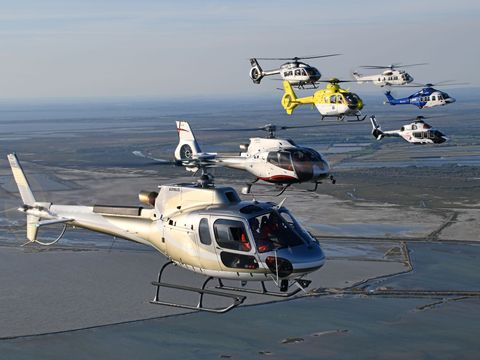
From single and twin-engine light and medium helicopters to those in the eleven-tonne class, Airbus has the right product for a…


Looking for more resources?
Find photos, videos, footage and more in our Media Centre.
The latest on the U070
In the spotlight
-

Vertical thinking: designing a strategy to navigate the new normal
Web Story
Helicopters
Mathilde Royer, Airbus Helicopters' EVP of Strategy and Sustainability shares how helicopters are the backbone of disaster relief and military missions. -

France orders Airbus VSR700 uncrewed aerial system
Press Release
Helicopters
-

Helicopter-drone collaboration
Web Story
Helicopters
-

Nothing can compare to a helicopter's capacity to make lifesaving interventions
Web Story
Helicopters
-

France signs framework agreement for Airbus VSR700 programme
Press Release
Helicopters


Rotor magazine
Stay up to date with our latest innovations and get the latest news from civil and military helicopter operators carrying out vital missions around the world.