
Airbus unveils study on the potential of sustainable aviation fuel to support economic growth and accelerate Canada’s climate transition

Farnborough, United Kingdom, July 21, 2026 – Sustainable aviation fuel (SAF)* could become a major driver of Canada’s industrial and economic growth, while contributing to the global aerospace industry’s aspirational goal to achieve ‘net-zero carbon emissions by 2050’, as set out by ATAG, IATA, and ICAO, according to a macroeconomic study conducted by Airbus and ICF, unveiled at the Farnborough International Airshow. The study outlines the requirements for SAF to meet 40% of Canada’s aviation fuel demand by 2040, quantifying both the policy support required and the resulting economic opportunities for Canada.
Between 2026 and 2040, the development of a Canadian SAF value chain could generate an estimated $32 billion contribution to the country’s GDP. This growth would be accompanied by the creation of 140,000 jobs between 2026 and 2040 across the value chain, representing nearly one quarter of the current direct workforce in the oil and gas sector. Moreover, it would generate nearly $890 million per year in net disposable income for these Canadian households. These benefits would be felt across the country, from agricultural and forestry regions to major urban centres, contributing to economic diversification and the vitality of local communities.
The lifecycle carbon emissions reductions** enabled by SAF adoption could generate an additional estimated societal value of $19 billion through avoided carbon costs, based on the Government of Canada’s methodology. The Social Cost of Carbon (SCC) has been adopted by Environment and Climate Change Canada (ECCC) to measure the additional economic impacts*** of an incremental increase in carbon emissions.
In a context where a significant share of fuel consumed in Canada is imported, developing a domestic SAF value chain is also a matter of energy sovereignty and economic resilience. Domestic production would help reduce reliance on foreign markets and mitigate exposure to geopolitical fluctuations.
Without an increase in domestic capacity, Canada’s reliance on biofuel imports could exceed 65% by 2030 to meet projected demand of 8.5 billion litres. This broader vulnerability would heighten energy security risks for the sector, which already relies on foreign suppliers for approximately 35% of its conventional aviation fuel.
This opportunity comes at a time when the international landscape is evolving rapidly. As incentive policies, particularly in the United States, are already accelerating investment and resource mobilization, Canada also has significant assets that could position it among the leaders in this industry, including abundant natural resources, industrial expertise and recognized leadership in the aerospace sector.
Airbus reaffirms its commitment to accelerating the development of a viable, accessible and affordable SAF market to help reduce the aviation sector’s reliance on fossil fuels. The company is positioning itself as a catalyst within the ecosystem by fostering industrial partnerships, supporting SAF deployment in its own operations and helping mobilize stakeholders across the value chain.
Airbus looks forward to continuing its constructive collaboration with government partners, alongside the Canadian Council for Sustainable Aviation Fuels (C-SAF). Predictable and complementary incentives will be critical to attracting investment and enabling the development of a competitive and viable SAF value chain over the long term. By aligning these industry initiatives with supportive public policy, Airbus aims to contribute domestic SAF production, ensure the availability of renewable fuels for the Canadian aerospace industry, and preserve the affordability of air travel.
Consult the full report on our website.
@Airbus #SAF #Canada #FIA2026
*Sustainable aviation fuel (SAF) is a synthetic fuel. In order to be considered sustainable, it must be made from renewable sources or feedstocks, which could include used cooking oils, fats, plant oils, or municipal, agricultural and forestry waste. It must also meet a set of stringent sustainability requirements (covering the full chain of custody) including regulations set by ICAO’s CORSIA scheme or the EU Renewable Energy Directive (RED). These requirements include food security, water management and human rights considerations. For example, SAF certification bodies independently verify that feedstocks for SAF do not divert resources needed for food production. For more information visit our website.
**While SAF and conventional kerosene emit the same amount of CO2 during flight, SAF can reduce lifecycle CO2 emissions by up to 80% compared to conventional jet fuel depending on the pathway used.
*** Impacts include, but are not limited to, changes in economic productivity, increased property damage from extreme weather events like floods, hurricanes, and forest fires, reduced ecosystem services and impacts on human health.

Farnborough Airshow 2026
Stay up to date with the latest news, stories and highlights related to the show.

Airbus press releases
Register to receive Airbus' latest press releases.
Related assets
Download
Download
EN-Airbus unveils study on the potential of sustainable aviation fuel to support economic growth and accelerate Canada’s climate transition
FR-Airbus présente une étude sur le rôle du carburant d’aviation durable dans la croissance économique et la transition climatique du Canada
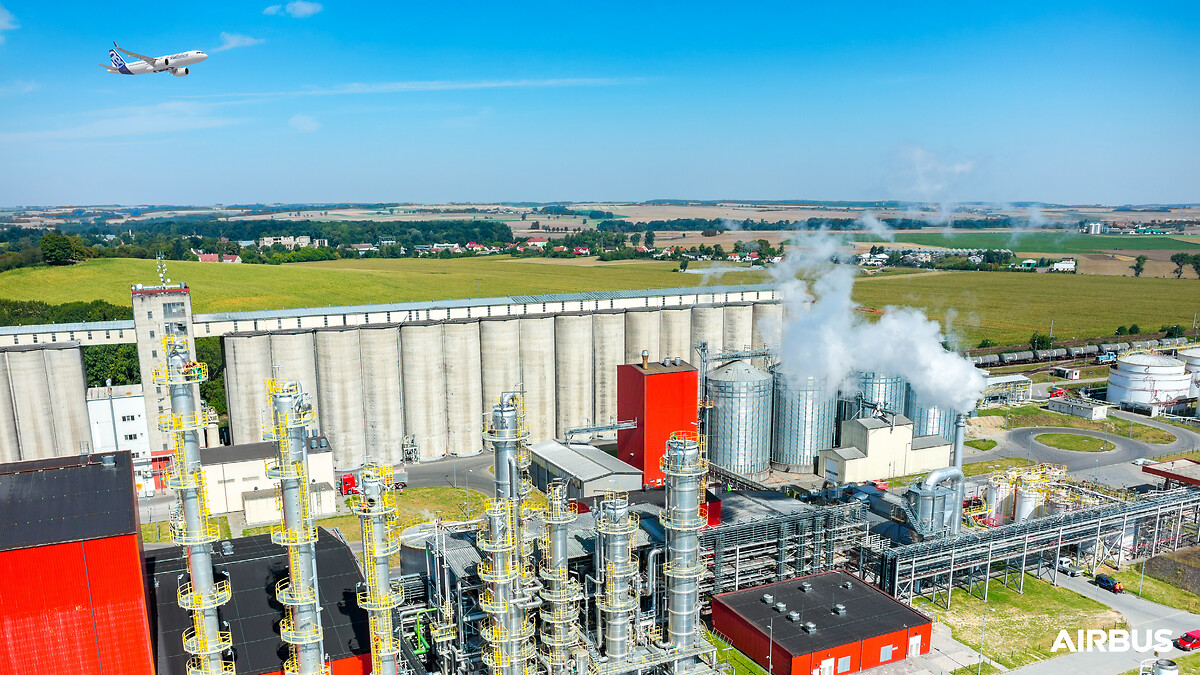
Sustainable aviation fuel (SAF)
Download
EN-Airbus unveils study on the potential of sustainable aviation fuel to support economic growth and accelerate Canada’s climate transition
FR-Airbus présente une étude sur le rôle du carburant d’aviation durable dans la croissance économique et la transition climatique du Canada
Sustainable aviation fuel (SAF)
Contacts
Amélie Forcier
AIRBUS | Canada
Annabelle Duchesne
AIRBUS | Canada
Discover more
-
Airbus in Canada
Airbus is proud to be a leading member of Canada's aerospace sector. Canada is the most significant official presence of Airbus…
-

What is sustainable aviation fuel?
Why SAF is a key pathway for aviation emissions reduction
-

Airbus' commitment to sustainable aviation fuel
How Airbus supports the usage and uptake of sustainable aviation fuel (SAF).


Related news
Continue reading
-

Canada’s CT-153 Juno gets ready for training
Web Story
Helicopters
The Royal Canadian Air Force has received the first delivery of its Airbus H135 fleet, marking a key milestone for Canada's (FAcT) programme. -

Airbus and Landing Zones sign strategic partnership for advanced UAS in Canada
Press Release
Defence
-

Airbus unveils study on the potential of sustainable aviation fuel to support…
Press Release
Innovation
-

Airbus signs agreement with Voyageur for first Airbus U030 Flexrotor order in Canada
Press Release
Helicopters
-

Air Canada and Airbus launch joint initiative to scale domestic Canadian SAF and…
Press Release
Innovation
