
Ten years of the A220: a vision realised, a journey just beginning
The story of a bold bet, the people who made it, and the aircraft it became

The first one was called Phoenix. Long before it was the A220, before it had a number or even a single passenger, it was a flight test vehicle. Its namesake was a tribute to the aircraft being given a second life. The team rebuilt it, and it rose, as the name implies, from the ashes.

Phoenix first A220
Alongside Phoenix, a series of seven prototypes with evocative names distinguished themselves, such as the intrepid Black Sheep (the second test aircraft) and the first CS300 in the lineup, Lucky Sevens. Each played an essential role throughout a decade of rigorous testing aimed at preparing the aircraft for its global entry into service and continuously improving it.
The idea was simple to state and audacious to attempt: build a single-aisle aircraft from a clean sheet of paper, and build it better than anything in its class. This is the story of that bet: of the people who placed it, and of the aircraft it became.

Bombardier CS300 flying
How a bet on a clean-sheet aircraft began in Mirabel, Canada
The idea was older than the aircraft. Before the A220, and before the C Series, there was an earlier Bombardier concept called BRJX, a vision that arrived before its moment and was set aside. But it never quite went away. It returned, reimagined in Mirabel, Canada, with even sharper ambition: to build the most efficient small single-aisle aircraft on the market, with every part designed to serve that singular goal.
Airbus A220 10 years entry into service
Building from nothing is the harder path. It is slow, it is costly, and it asks for enormous ambition. But it was the only path to a true twenty-first-century aircraft. Dominique Fafard, one of the roughly fifty people in Mirabel working towards this goal, joined the effort in 2013, working on Phoenix as a quality supervisor, helping ready the aircraft for the day it would finally fly.
It was challenging, but the kind of challenge that fuelled us and unified the teams working hard to achieve a goal. And we did.
- Dominique Fafard, Head of Quality in Service
That day came on 15 July 2016. A SWISS flight from Zurich to Paris became the first time the aircraft now known as the A220 carried paying passengers. The bet, years in the making, had finally paid off. For Fafard, who had helped ready that very first aircraft, it remains, in his words, one of the best moments of his career. The A220 had become the first clean-sheet design in its segment in a generation, and the first full fly-by-wire commercial aircraft made and certified in Canada.

SWISS A220 First Flight
From Quebec to five continents: the A220’s global family
Yann-Érick Champagne-Généreux, Head of Logistics and Process, had been there since the earliest days. Of everything he witnessed, one moment stays with him above all.
The moment that will always stay with me is the first delivery to our launch customer, SWISS. Seeing the fruits of our labour take flight in their colours was a moment of immense pride.
- Yann-Érick Champagne-Généreux, Head of Logistics and Process
From there, the aircraft went out into the world. The C Series joined the Airbus family, becoming the A220 in 2018, and a second assembly line opened in Mobile, Alabama, in 2020, carrying production beyond its Canadian home in Mirabel. The plane began travelling the globe, opening new routes and connecting people to places they had never been able to reach directly: from northern Europe to the Canary Islands, from East Africa to Mumbai, into the heart of London, and across the vast emptiness of the Australian outback. And it did all this so quietly it earned a nickname, the Whisperjet.

A220-300
And, by the time Mirabel delivered the 500th aircraft in 2026, the A220 had achieved major milestones:
- Global reach: flown by 25 operators across five continents.
- Market success: over 1,000 firm orders placed.
- Impact: more than 240 million passengers served.

A220 10 years in service infographic
This ongoing success story bridges the dedicated teams who designed and built the aircraft with the crews and passengers who fly it today.
Built to evolve: where the A220 goes from here
Ten years on, the A220 is the most technologically advanced aircraft in its class. It is also, now, fully one of the family. It shares the same systems, the same tools, and the same support as the rest of the Airbus fleet, and sits squarely within the Airbus commercial line-up. Even the cabin shows it, having taken on the Airspace design language found across Airbus aircraft, with larger overhead bins and the generous windows passengers tend to notice first.

A220 Airspace cabin with Air Canada
This is the quiet advantage of a clean sheet. The aircraft was never truly finished. It was built to keep evolving, to take on new technology and refine the way it feels to fly, decade after decade.
What it becomes next will be decided, as it always has been, by the people behind it. For Istifan Ghanem, who joined the programme in 2007 and now leads A220 Customer Support, Upgrades and Contracts Services, that is what the years ahead are really about.
I would like them to look back and say that the decisions made during the programme’s first twenty years created a strong foundation for decades of success. If they are still speaking with pride about the aircraft, the people behind it, and the value it brings to airlines and passengers around the world, then we will have accomplished something truly special.
- Istifan Ghanem, Head of A220 Customer Support, Upgrades and Contracts Services
Behind every one of those flights are thousands of people who designed the aircraft, built it, and continue to make it better every single day. Its ongoing success is a reflection of them and their dedication, drive, and determination.
Ten years ago, a vision that had once been set aside was given a second life by a small team in Mirabel. A handful became thousands, across Canada, the United States, and Europe, and more than 240 million journeys followed. The bet paid off. But ask the people who made it, and they will tell you the story is not finished. The same belief that drew the first lines, the belief that it is always worth the effort to build something better, is what carries it forward.
And while the vision has been realised, the journey is just beginning.
A220 ten years entry into service
-


A220-300
-
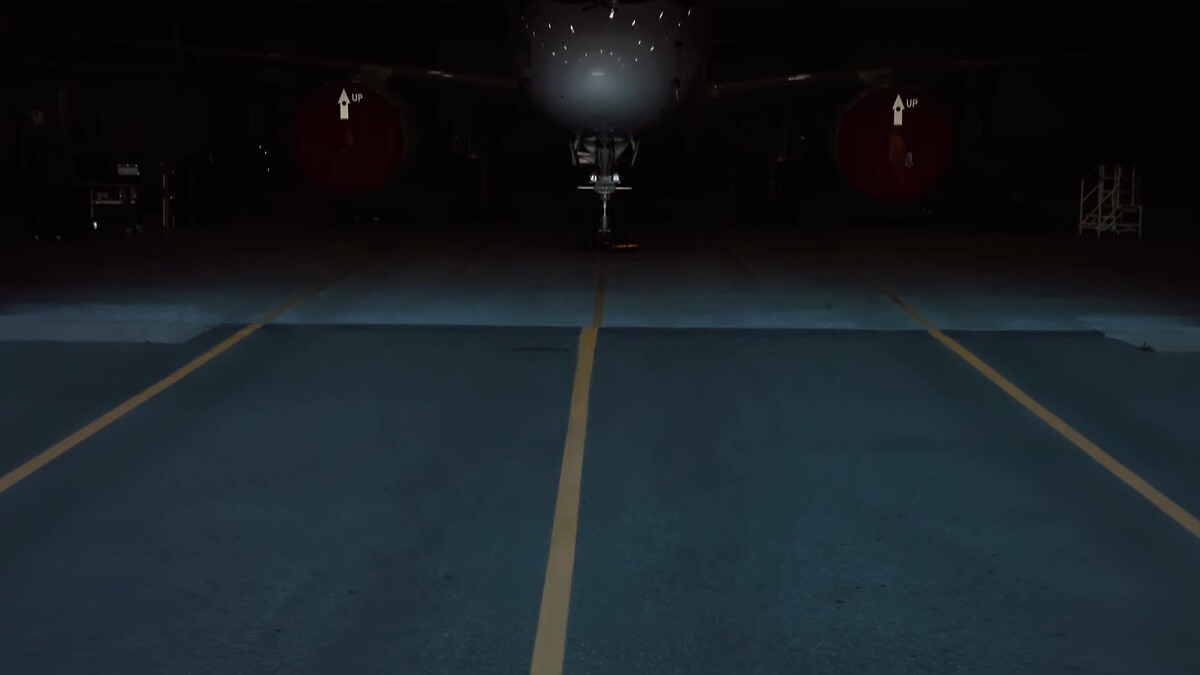
Airbus A220 10 years entry into service
-


SWISS A220 First Flight
-


Bombardier CS300 flying
-


Phoenix first A220


Download
Infographic
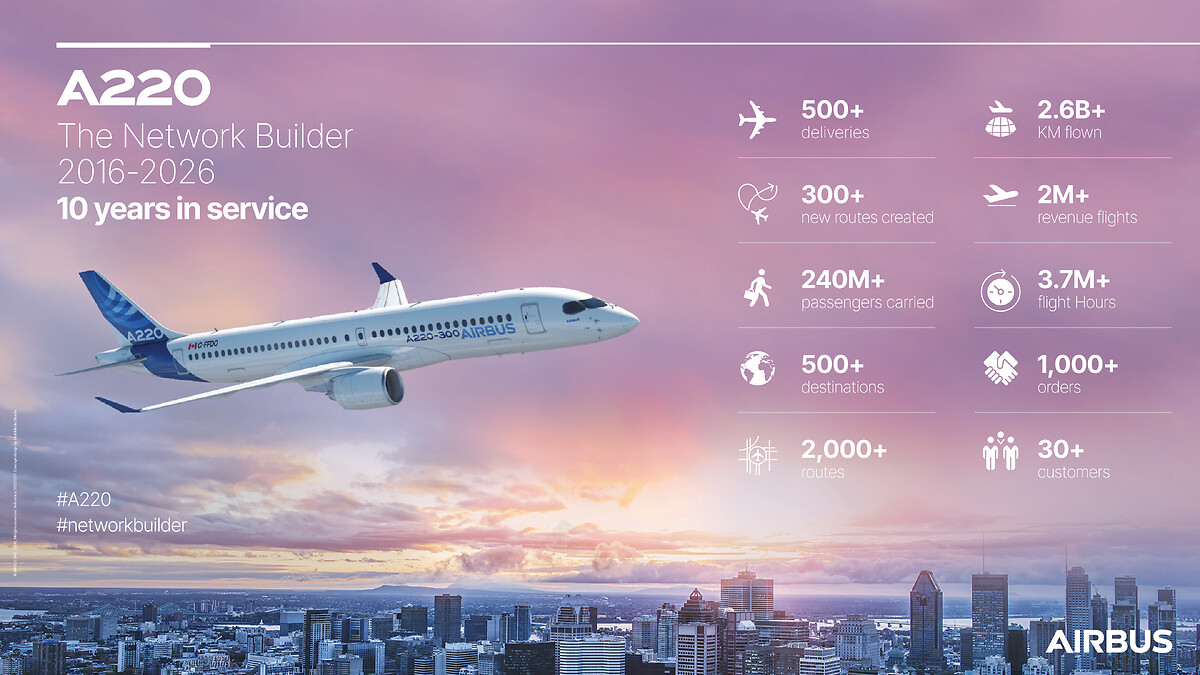
A220 10 years in service infographic
Infographic
A220 10 years in service infographic
Learn more about the A220

Read more commercial aircraft stories
-

A350F first flight: new freighter aircraft takes to the sky
Web Story
Commercial Aircraft
Read the story about the A350F first flight -

Countdown to A350F first flight: Preparing for the sky
Web Story
Commercial Aircraft
-

Unpacking the A350F’s new livery
Web Story
Commercial Aircraft
-

Pushing the A350F to the limits: Ground Vibration Testing
Web Story
Commercial Aircraft
-

Extending the horizon: Inside the A350-1000ULR’s longest development flight
Web Story
Commercial Aircraft
