
Airbus A320 Family, the most delivered aircraft ever
Proven performance and innovation

A family of continuous evolution
An Airbus A320 Family aircraft takes off or lands somewhere in the world every two seconds.
Since the first A320 flight, on the 22 February 1987, the A320 Family has been in a state of continuous evolution. As a leading family of single-aisle aircraft, its evolution reflects our commitment to performance.
Covering every segment of the single-aisle market, from short-haul routes to the extra long range capabilities of the A321XLR, the aircraft family's performance has lower fuel consumption and noise emissions than previous generation single-aisle aircraft.
Offering a comfortable experience, flight after flight, the A320 Family is loved by travellers.
-


-

A220, the game-changing single aisle
From inception, the single‑aisle A220 Family was designed to be spacious and provide passengers with the most comfortable travel experience thanks to the largest and brightest cabin featuring wide seats and generous personal space. Its new-generation engines contribute to superior efficiency, burning less fuel, reducing noise levels and making the A220 a better neighbour.
-


From the A320 first delivery in 1988
- First delivered in 1988, the A320 became the world’s first commercial aircraft to feature full digital fly-by-wire flight controls, setting a new standard for precision, safety and cockpit design. Airbus soon expanded the family with the A319, A321 and A318, providing a unified fleet platform adaptable to virtually any route.
- In 2010, the A320neo, short for “New Engine Option”, ushered in a new era of performance. Featuring quieter, more fuel-efficient engines, aerodynamic Sharklets (wingtip devices), and upgraded cabins, the neo delivered 20% lower fuel burn and halved noise emissions.
- In 2024, the A321XLR (Xtra Long Range) followed as the family’s longest range variant, extending operational range to 4,700 nautical miles, enabling airlines to serve long-haul routes.
- Certified to fly on up to 50% Sustainable Aviation Fuel (SAF) today, and engineered for up to 100% SAF capability by 2030, the A320 Family is playing a leading role in Airbus’ mission to decarbonise air travel.
- The A320 family is produced all over the world with 10 Final Assembly Lines (FALs) and more than 20 sites. In 2025, Airbus inaugurated new FALs in Mobile, Alabama and Tianjin, China. Read more about how Airbus is expanding its operations to meet growing demand.

Explore the A320 Family in detail
Discover the technical specifications, performance data and unique capabilities of the A320 Family.
The A320 Family: unlimited options
CHARACTERISTICS
The Airbus A320 Family packs flexibility and reach into distinct airframes:
| NEO family | Seats in typical 2 class configuration | Maximum capacity | Range (max) |
120-150 passengers | 160 | 3,650 nautical miles | |
150-180 passengers | 194 | 3,400 nautical miles | |
180-220 passengers | 244 | 4,000 nautical miles | |
180-220 passengers | 244 | 4,700 nautical miles |
A321XLR: extend the range of possibility
LONG-RANGE FLEXIBILITY
Meet the newest member of the A320 Family, the A321XLR (Xtra Long Range).
Boasting a range of 4,700 nautical miles (8,700 km), it offers unrivalled reach and efficiency.
The extended range comes courtesy of a newly designed rear centre fuel tank (RCT) and enhancements to landing gear and wing flaps, which help deliver a 30% lower fuel burn per seat compared to previous generation single-aisle aircraft.
With a seating capacity of 180–244 passengers, the XLR blends cabin comfort and Airbus’ Airspace technology with narrowbody economics, opening new route opportunities while delivering quieter flight and lower emissions.


A320 Airspace L-Bins
The A320 Family passenger experience with Airspace
INSIDE THE A320
The A320 Family is trusted by airlines and loved by travellers as it delivers a consistently comfortable experience, flight after flight. Across all variants, the cabin is designed to be bright, quiet, and open, making it a natural fit for travel of every sort.
On the A320neo aircraft, the Airspace cabin elevates every detail offering spacious overhead bins, wider seats, soothing LED mood lighting, and improved air circulation keeping a constant focus on comfort and calm, leaving ample room for connection.


A320 COCKPIT CLOSE UP
The A320: innovation that sets the standard and keeps evolving
PIONEERING INNOVATION
The A320 Family changed the future of flight when it became the first civil aircraft to introduce full digital fly-by-wire technology, replacing conventional manual controls with an electronic interface. This innovation is now an industry standard.
Since entering service in 1988, this cutting-edge aircraft has continually raised the bar, bringing together state-of-the-art aerodynamics, advanced materials, and digital systems to deliver cleaner, quieter and more efficient performance across every variant.
As the most successful aircraft family in commercial aviation history, the A320 continues to evolve and improve the way people and goods move across the globe.
Technology & Innovation
Materials: Modern materials that reduce weight and emissions
- Carbon Fibre Reinforced Polymer (CFRP) is used in key wing structures, improving wing strength while also reducing weight.
- Aluminium-Lithium (Al-Li) alloys, used in the fuselage, offer a lighter, corrosion-resistant alternative to traditional materials.
Wings: Aerodynamic wing design built for efficiency
- Sharklets, the signature curved wingtip devices, reduce drag and improve lift, helping save up to 4% in fuel.
- Adaptive flaps and advanced high-lift devices on longer-range models like the A321XLR help optimise performance during takeoff, landing and cruising.
Cockpit & Flight Controls: Pioneering the digital flightdeck
- The A320 was the first commercial aircraft to use full digital fly-by-wire technology, replacing traditional manual controls with electronic signals, improving safety and providing smoother handling. Instead of a traditional yoke, pilots use a side-stick.
- This common cockpit design is shared across Airbus aircraft - what we call “aircraft commonality” allowing for easier pilot transition between different models and increasing operational efficiency and flexibility for airlines.
- Pilots can fly the A318, A319, A320 and A321 with a Single Type Rating thanks to their identical cockpits and operating procedures.
Engines & Efficiency
- The A320neo (New Engine Option) features CFM LEAP-1A or Pratt & Whitney GTF™ (Geared Turbofan) engines that reduce fuel burn by up to 20% when compared to previous models.
- Advanced engine control systems enable precise fuel management and contribute to lower emissions.
Cabin Systems: Technology that enhances the passenger experience
- Cabin air is refreshed every 2–3 minutes and filtered using HEPA-grade systems.
- LED mood lighting adjusts to time zones and enhances onboard ambiance. Combined with smooth flight controls and optimised cabin pressure helps fight jet lag and reduces fatigue on both short and long journeys.
Maintenance
The aircraft is Skywise-enabled, allowing operators to monitor plane health data in real time helping to reduce unplanned maintenance.


A319neo SAF - refueling
The A320: lower emissions and reduced fuel burn
Designed to lower emissions, reduce fuel burn, and support more efficient flight operations.
The A320neo, powered by new-generation engines and advanced sharklets, delivers up to 20% lower fuel consumption and CO₂ emissions per seat compared to previous generation aircraft.
And, as of 2024, all Airbus aircraft are certified to fly with up to 50% sustainable aviation fuel (SAF).
From production to operation, the A320 Family is a cornerstone of Airbus’ net-zero roadmap.
We love A320
-


-


-


-

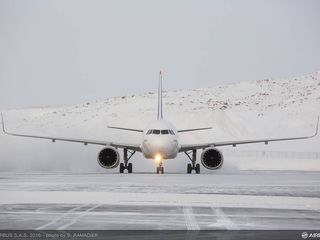
A320 Ramp up
A320 Ramp up video 16/9
-

-


-


-


A320 FAQs
What are the variants of the Airbus A320 Family?
The A320 Family includes four core aircraft types, each with unique capacities and ranges, all built on the same fundamental platform to ensure operational commonality:
- A318: The smallest variant, seating ~100 passengers.
- A319: Compact and versatile, typically seats 120 - 150 passengers.
- A320: The original and most widely used version, seating 150 - 180 passengers.
- A321: The largest member, seating 180 - 244 passengers depending on layout.
Two engine generations:
- ceo (Current Engine Option): The original engines.
- neo (New Engine Option): Featuring upgraded engines, better fuel efficiency, and lower emissions.
The A320 Family also supports corporate jet and freighter variants (like the A321P2F).
What is the difference between A320neo and A320ceo?
A320ceo (“Current Engine Option”) refers to the original generation of A320 Family models that use the first-generation engines (such as CFM56 or IAE V2500 engines on A320s). A320neo (“New Engine Option”) is the newer generation introduced in the mid-2010s, featuring upgraded engines and systems.
The A320neo features:
- New-generation engines (CFM LEAP-1A or Pratt & Whitney GTF™)
- Aerodynamic improvements including Sharklets
- Up to 20% lower fuel burn and CO₂ emissions per seat
- Longer range and quieter operations
- Compatibility with up to 50% sustainable aviation fuel (SAF)
The ceo models remain in operation worldwide, known for their reliability and global commonality, but the neo family is now the most delivered single-aisle aircraft programme globally.
What are the key features of the A320neo?
The A320neo (“New Engine Option”) is an upgraded version of the A320 with enhancements that improve efficiency and passenger comfort. Key features of the A320neo include:
- Two options: New-generation engines (Pratt & Whitney GTF or CFM LEAP-1A)
- Sharklets: Wingtip devices that reduce fuel burn and emissions
- Up to 20% lower fuel consumption per seat vs. previous-generation aircraft
- 50% smaller noise footprint vs. previous-generation aircraft
- Airspace cabin: optional interior upgrade including options like mood lighting, larger bins, and cleaner air
What is the range of the Airbus A321neo?
- A321neo: ~3,500+ nautical miles (6,500+ km)
- A321LR (Long Range): ~4,000 nm (7,400 km)
- A321XLR (Xtra Long Range): ~4,700 nm (8,700 km), ~11-hour flight time
These ranges make the A321neo Family capable of true transatlantic and long-haul missions, connecting routes that were previously out of reach for single-aisle aircraft.
How many passengers can the A320ceo or A320neo typically carry?
In a typical two-class configuration (with economy and a premium class), the A320 carries around 150 passengers. If configured for all-economy (high density), the A320 can accommodate roughly 180 passengers, which is often the max seating for the A320ceo variant .
The latest A320neo can be certified for slightly higher capacity. With Airbus’ cabin innovations (such as space-efficient lavatories), some A320neo layouts can seat up to 188-194 passengers at absolute maximum in a single-class layout. However, most airlines choose a configuration around 150-180 seats to balance comfort and capacity.
What is the A320's Airspace cabin?
Airspace by Airbus is the name of Airbus’s latest cabin design which brings widebody-style comfort to the single-aisle A320 Family.
Benefits of the A320’s Airspace cabin include:
- 18” wide seats and a wider aisle for improved personal space
- Larger overhead bins that fit 8 bags per bin, helping to speed boarding
- LED mood lighting that helps reduce jet lag and creates ambiance
- Cleaner air with HEPA filters and 2–3 minute air refresh cycles
- Quieter cabins due to better insulation and low-noise engines
- Panoramic window design and modern lavatories
The Airspace cabin brings a new level of comfort, ambiance, and convenience to the A320 Family, making the flying experience closer to that of a widebody long-haul aircraft, even on shorter trips.
What technologies are used in the A320 family cockpit?
- Full fly-by-wire technology: Digital input for precision and safety
- Glass cockpit: Clean layout with large colour screens and flight management systems
- Common type rating: Pilots can fly A318, A319, A320, and A321 with minimal extra training
- Advanced avionics: Side-stick controls, Flight Envelope Protection
Skywise platform: Enables real-time aircraft health monitoring for predictive maintenance
Which airlines fly the A320 family?
The A320 is the most widely used single-aisle airliner, serving with full-service carriers, low-cost airlines, and leasing companies alike. In fact, over 300 airlines and customers have ordered A320 Family jets .
Some examples span every region: large network airlines (like American Airlines, Lufthansa, Air France, China Southern), regional and flag carriers, as well as budget carriers (such as easyJet, Air Asia, IndiGo, JetBlue) fly on A320 Family models. The aircraft’ versatility, ranging from the 124-seat A319 to the 240+ seat A321, means there’s an A320 variant suited for almost any airline’s needs.
An A320-family jet is taking off or landing roughly every few seconds somewhere around the globe. This worldwide presence underscores why the A320 is called “the aircraft family of choice for airlines around the world”
Where are Airbus A320 aircraft manufactured?
Airbus A320 Family aircraft are produced through a global manufacturing network and the final assembly of A320 jets takes place at four main Final Assembly Line (FAL) sites on three continents.
- Hamburg, Germany: A major A320 Family production site (A319, A320, A321 are built here). Hamburg also handles a lot of A320 cabin customisation and deliveries.
- Toulouse, France: One of Airbus’s primary assembly plants, where A320 and A321 models are assembled.
- Tianjin, China: Airbus established a final assembly line in Tianjin to serve the growing Asia-Pacific market. A319, A320, and A321 aircraft are assembled here, bringing production closer to Asian customers.
- Mobile, Alabama, USA: Airbus opened an A320 Family assembly line in Mobile to serve North American customers. This facility currently assembles A319, A320, and A321 models for airlines in the Americas.
Discover more about A320
-

Saudia becomes first Middle East and Africa operator of the Airbus A321XLR
Press Release
Commercial Aircraft
Saudia has taken delivery of its first A321XLR, becoming the first airline in the MEA to operate Airbus’ newest extra-long-range single-aisle aircraft. -

Airbus delivers first A321XLR for Air Canada
Press Release
Commercial Aircraft
-

AerCap places order for 100 additional Airbus A320neo Family aircraft
Press Release
Commercial Aircraft
-

Air Astana finalises order for 25 Airbus A320neo Family aircraft
Press Release
Commercial Aircraft
-

Philippine Airlines extends FHS support agreements across its Airbus fleet
Press Release
Commercial Aircraft

You might also be interested in
Discover more
-
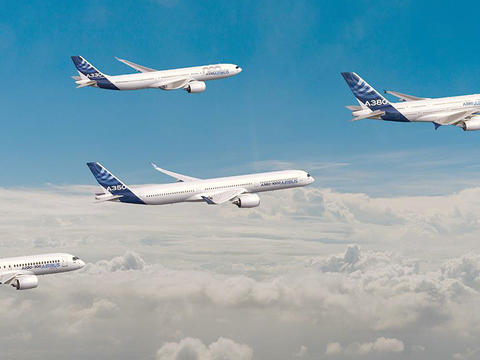
Airbus Passenger Aircraft
Explore Airbus passenger aircraft. Discover comfortable, safe & efficient flight with our A220, A320, A330, A350 & A380 families…
-

Join us on our A321XLR journey
Join us on our A321XLR journey to certification. Follow the A321XLR during its final stages of certification and entry into…
-

Airbus A220 Family, purpose-built single-aisle aircraft
Discover the Airbus A220: a clean-sheet design single-aisle aircraft offering quiet comfort, fuel efficiency, and unmatched…
-
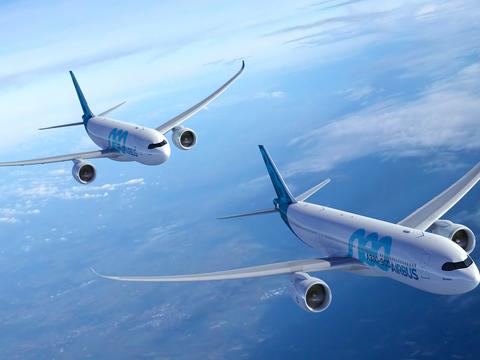
Airbus A330 Family, versatile widebody aircraft
Discover the A330 Family, a versatile widebody valued for its proven performance. Explore the modern A330neo and its award…
-

Airbus A350 Family, long range widebody aircraft
Experience the Airbus A350, designed for the future of long-haul travel. Discover its clean-sheet design, advanced composites,…


